
In the high-stakes theater of international football, longevity is usually the enemy of excellence. History is littered with the ghosts of champion teams that peaked, plateaued, and eventually dissolved under the suffocating weight of their own expectations. Yet, as the 2026 FIFA World Cup reaches its crescendo in North America, one team continues to defy the laws of sporting entropy: Argentina.
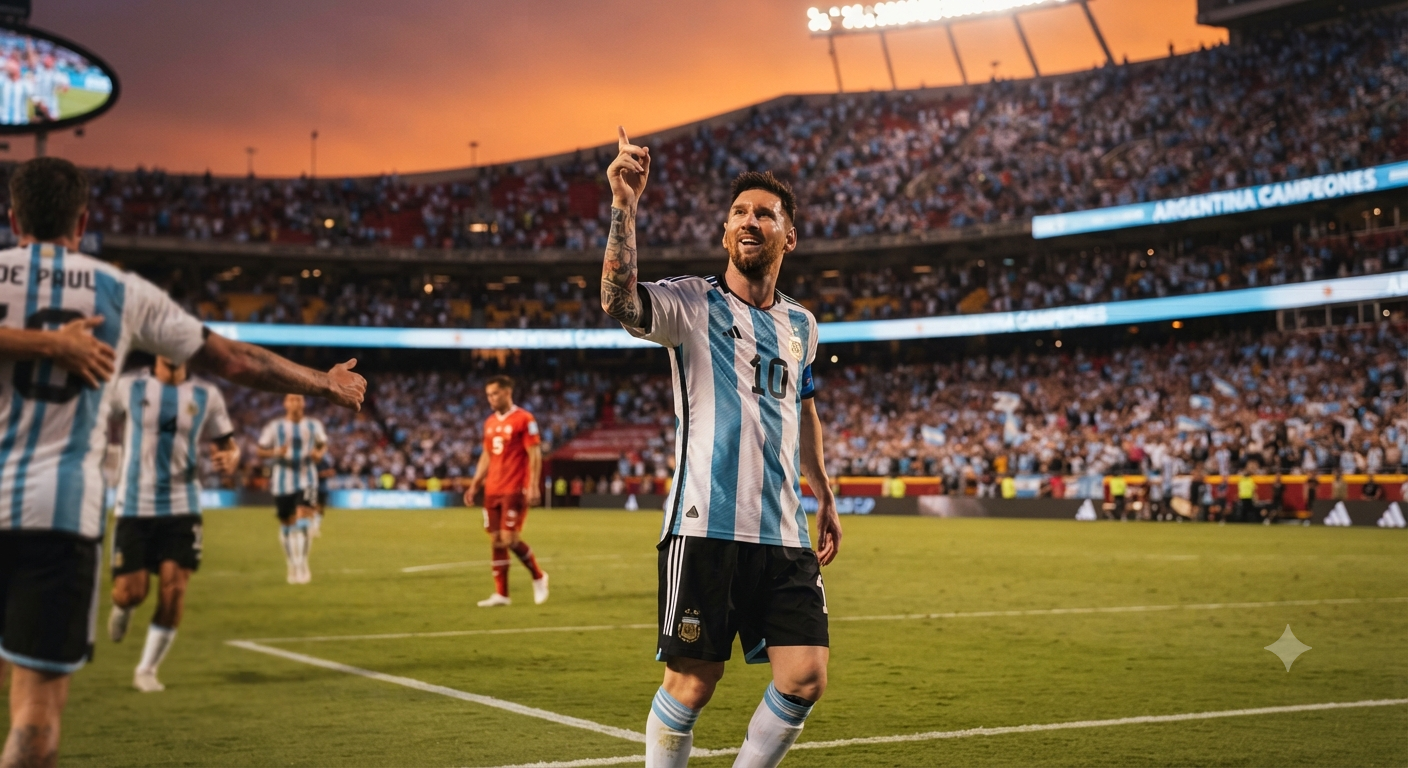
Following a grueling 3-1 extra-time victory over a resilient Swiss side at Arrowhead Stadium, Lionel Messi stood before the cameras, his face etched with both the exhaustion of a veteran and the exhilaration of a child. When asked about his team’s relentless ability to remain at the summit of the game—having already captured the 2022 World Cup and maintained a stranglehold on continental and global competition—the captain didn’t reach for tactical jargon or platitudes. He opted for something more profound.
“This group has got people used to doing things that aren’t normal,” Messi said. “It’s not easy to come back from being world champions, winning everything we won, and then continue competing and remaining at that level… that’s why we have to enjoy it so much.”
His assessment was not merely the humble reflection of a legend; it was a cold, hard evaluation of a statistical anomaly. Argentina is currently engaged in a run that challenges the conventional wisdom of what a “generational team” can actually achieve.
The Psychology of the “Impossible”
To understand why Messi classifies this run as “not normal,” one must look at the psychological landscape of defending champions. Most teams, after reaching the absolute peak of the mountain, succumb to a subtle, insidious phenomenon known as “champions’ fatigue.” The hunger—the primal, desperate drive that fuels the rise to the top—is often satisfied by the trophy lift.
Argentina, under the stewardship of Lionel Scaloni, has seemingly bypassed this developmental hurdle. From the outside looking in, the Albiceleste do not appear to be playing to defend a legacy; they appear to be playing as if they are still the challengers.
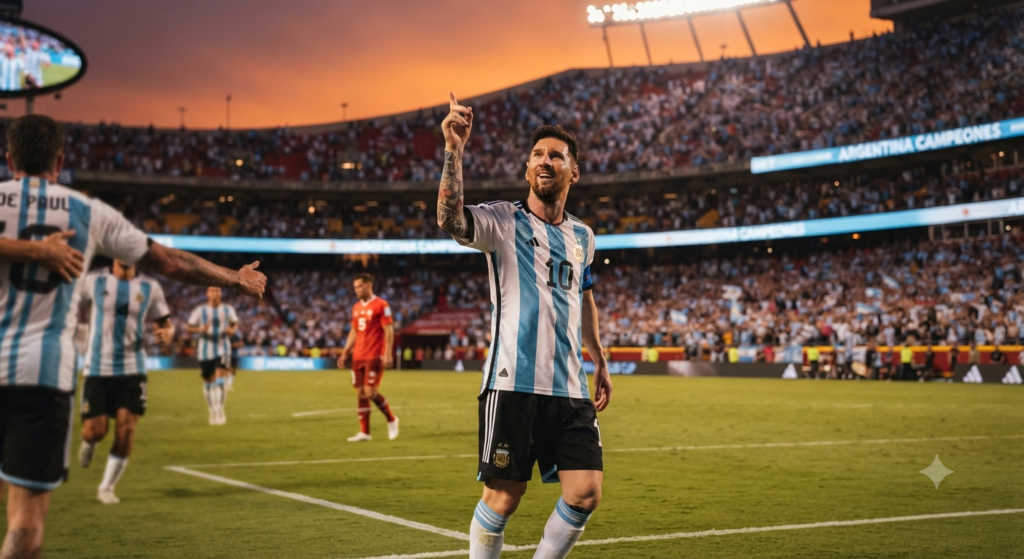
This mindset is cultivated through a blend of ruthless accountability and absolute cohesion. Scaloni has managed to curate a roster that functions less like a collection of superstars and more like a tribal collective. When Julián Álvarez or Lautaro Martínez finds the back of the net, as they did against Switzerland, the celebration is not of individual glory, but of a mechanism working exactly as intended.
“We have this capacity to suffer,” says teammate Rodrigo De Paul, often referred to as Messi’s “bodyguard” on the pitch. “When the match gets tight, when the legs are heavy, we don’t look at each other and wonder who will save us. We look at each other and know that we are all going to save each other.”
The Tactical Blueprint: Evolution over Stagnation
While the passion is the fuel, the tactical evolution of this Argentine side is the engine. The team that won the 2022 World Cup in Qatar was defined by a specific, high-intensity structure centered on supporting Messi’s playmaking genius. The 2026 iteration, however, is a different beast entirely.
Facing Switzerland, Argentina encountered a defensive low block that would have frustrated many of their predecessors. The Swiss were disciplined, organized, and physically imposing. For long stretches, the game was a stalemate. Yet, the current Argentine squad possesses a level of tactical patience that is, indeed, “not normal.”
They no longer rely solely on moments of individual brilliance. Instead, they demonstrate an almost rhythmic ability to pull defenses apart through orchestrated movement. The goals scored in extra time were not chaotic flukes; they were the result of a system that trusts its depth. When the starting eleven struggles to find the breakthrough, the bench provides a surge of fresh, high-quality intent.
This adaptability has been their hallmark in the 2026 tournament. Whether it’s shifting to a more conservative defensive stance to protect a lead or committing bodies forward in a desperate search for a goal, the team shifts shapes with a fluidity that suggests a deep, collective understanding of Scaloni’s vision.
The Messi Factor: A Leader Among Equals
It is impossible to discuss Argentina’s success without acknowledging the man who anchors it. At 39, Lionel Messi is no longer the explosive, sideline-hugging winger of 2010 or the primary goal-scoring engine of 2014. He has morphed into something more cerebral—a conductor who dictates the tempo of the game with the precision of a surgeon.
Messi’s contribution to this “not normal” run is characterized by his tactical discipline. He knows his physical limitations and chooses his moments with devastating efficiency. Against the Swiss, he was the fulcrum, drawing defenders out of position and creating pockets of space for the likes of Enzo Fernández and Alexis Mac Allister to exploit.
But perhaps more importantly, Messi has become the ultimate psychological stabilizer. In the past, the pressure of the national jersey seemed to weigh on him like lead. Today, he plays with a liberating freedom. He is the first to track back, the first to encourage a teammate who misplaces a pass, and the calmest voice in the huddle when the game descends into chaos.
“He doesn’t have to carry the world anymore,” one Argentine journalist noted in the press zone. “He has built a world that carries him.”
The Road to the Final: The England Semifinal
The narrative arc of this tournament is building toward a crescendo that fits the stature of a defending champion. The victory over Switzerland guarantees a semifinal berth against England—a rivalry with deep historical and sporting scars.
England enters the match with their own weight of expectation, boasting a squad laden with Premier League talent and a hunger to reclaim the world title. The clash in Atlanta promises to be a battle of styles: England’s athletic, direct, and transition-heavy game against Argentina’s methodical, possession-based, and emotionally charged machine.
For Argentina, this is the hurdle that separates a “great run” from a “legendary era.” To beat England and progress to the final would be to prove that their form is not just a streak, but a permanent state of superiority.
The Legacy of the “Not Normal”
As the tournament moves toward its conclusion, the broader footballing world is beginning to grapple with the significance of what Argentina is doing. We are witnessing a team that has managed to stay relevant at the top of the pyramid for four consecutive years.
In the history of sport, such sustained excellence is rare. It is the realm of the 1990s Bulls, the 1970s Brazilians, and the 2010s Spanish side. Argentina has written its name alongside these titans. Whether or not they lift the trophy again in 2026 is almost secondary to the reality that they have forced us to redefine our expectations.
They have shown that a national team can operate with the consistency of a club side. They have shown that a legend can evolve rather than fade. Most importantly, they have shown that while “normal” is what we expect from the ebb and flow of sports, “not normal” is what we get when belief, talent, and tactical discipline converge at the perfect time.
As Messi steps onto the pitch in Atlanta, the world will be watching, waiting to see if the “not normal” can hold for one more week. Regardless of the result, one thing is certain: we are watching an era of football that will be discussed for decades to come. Argentina isn’t just defending a trophy; they are defending their right to be remembered as the greatest iteration of a national team in the modern era.

Leave a Reply