
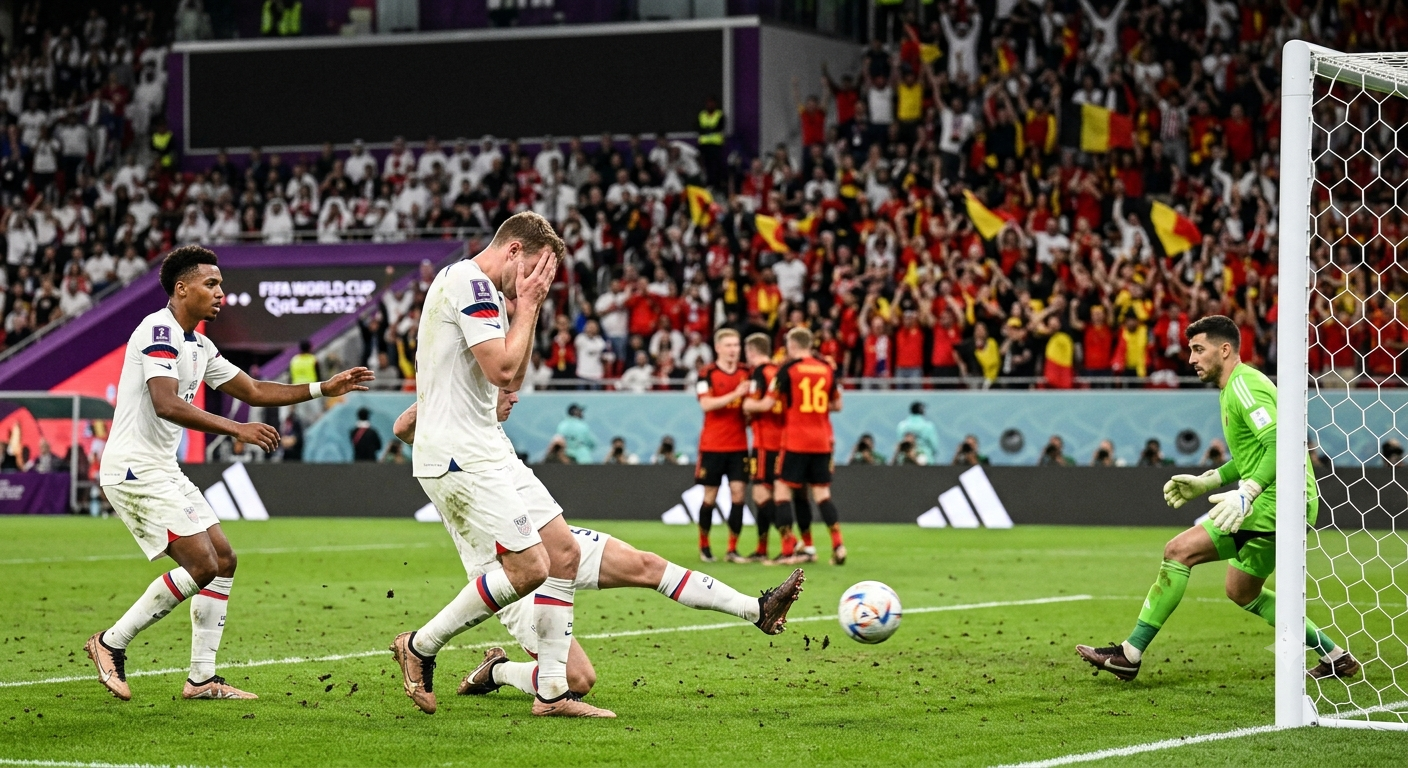
The dream didn’t just end; it collapsed under the weight of its own structural fractures.
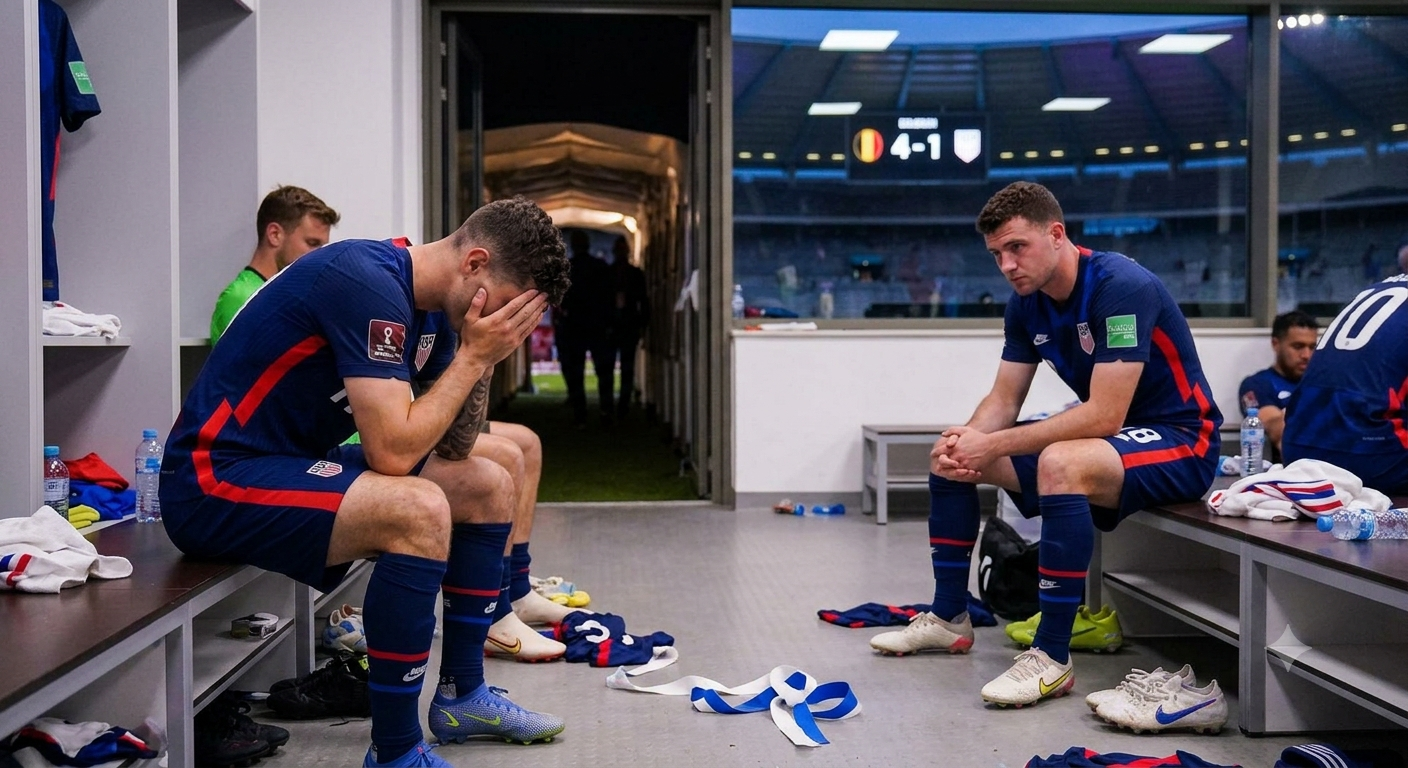
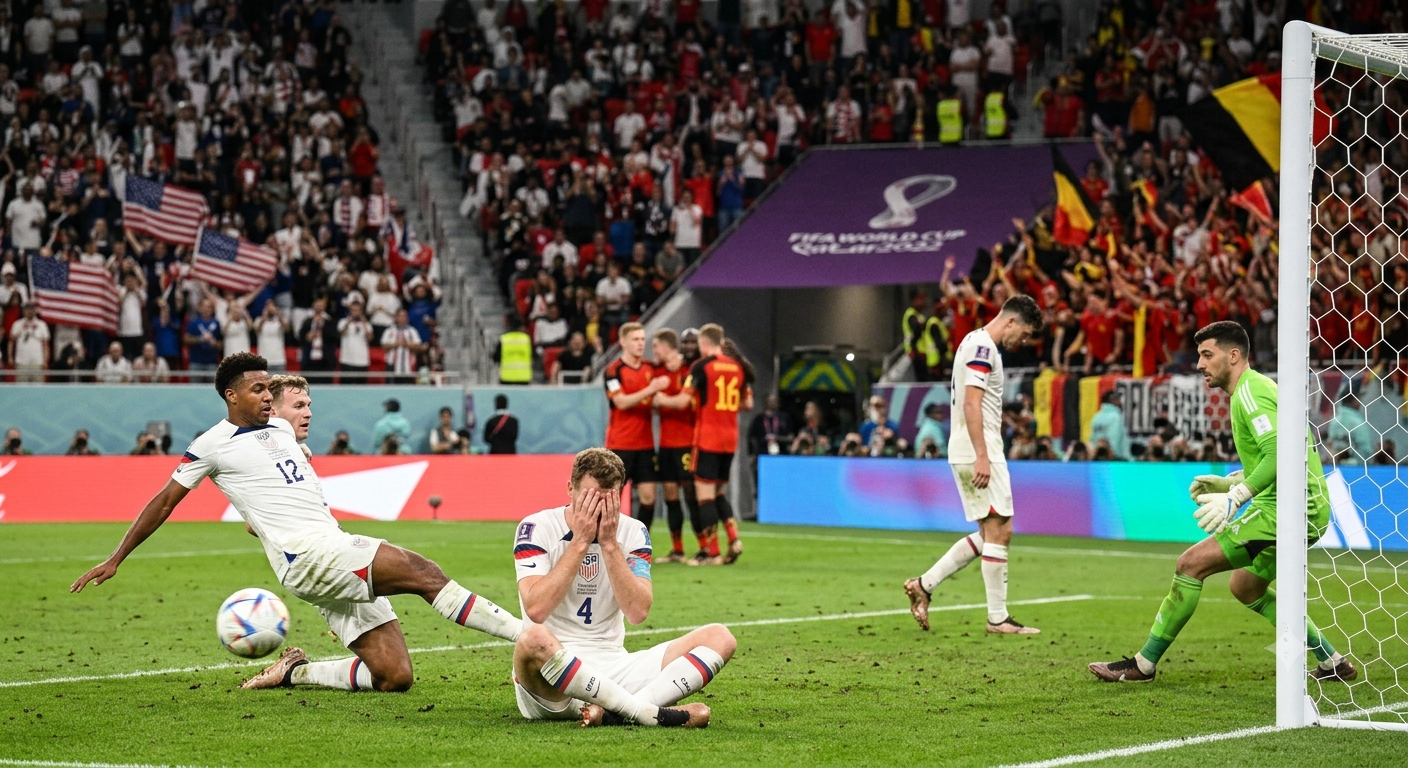
For months, the narrative surrounding the United States Men’s National Team (USMNT) was built on hope, momentum, and tactical evolution. Fans and analysts alike spoke of a golden generation ready to disrupt the global football hierarchy. Instead, a warm evening turned into a chilling reality check as Belgium systematically dismantled the United States 4-1.
It was a match billed as a legacy-defining test. It lived up to that billing, but for all the wrong reasons. While Belgium showcased the clinical precision of a seasoned European heavyweight, the United States offered a masterclass in self-sabotage. At this level of international football, individual talent can win matches, but defensive cohesion wins tournaments. On this night, the U.S. backline suffered an unprecedented collective meltdown, turning what should have been a tight, tactical chess match into a chaotic, punishing rout.
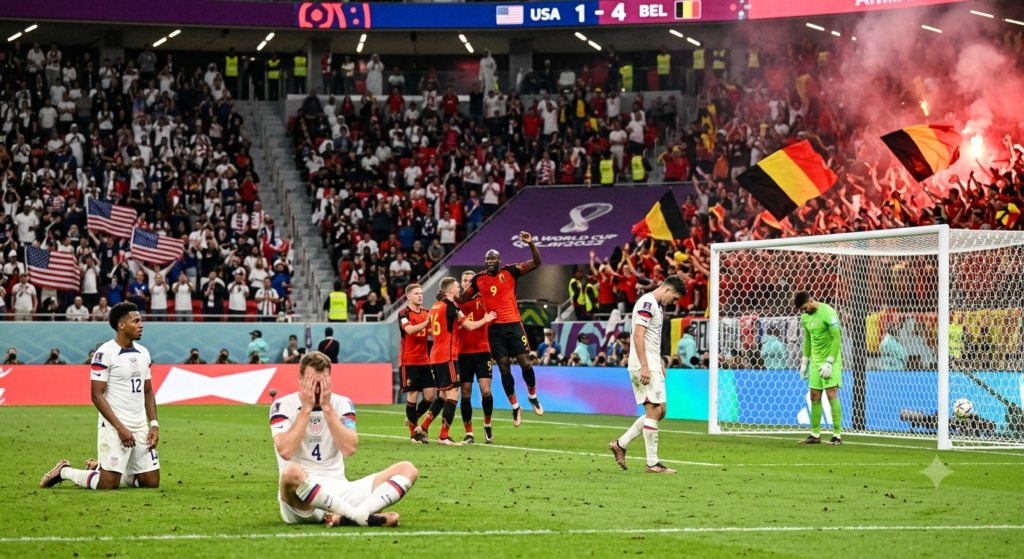
1. The Anatomy of a Meltdown: How the Defense Crumbled
To understand the scale of the disaster, one must look closely at the tactical deployment and individual errors that plagued the U.S. defensive unit from the opening whistle. The manager’s decision to opt for a high defensive line against a Belgian side possesses blistering pace on the wings and elite playmaking in the half-spaces was an aggressive gamble that backfired spectacularly.
From the first whistle, the U.S. backline looked disconnected. Communication, usually a hallmark of this veteran defensive core, was completely absent. Spaces between the central defenders and the fullbacks resembled gaping chasms, which Belgium’s inverted wingers exploited with ruthless efficiency.
[Belgian Midfield] ───> Passes into Open Space ───> [Gaping Chasm]
                                                       │
                                        ┌──────────────┴──────────────┐
                                        ▼                             ▼
                              [U.S. Left Back]               [U.S. Center Back]
                            (Caught out of position)       (Late to step up)
The first goal set the template for the rest of the match. A simple, speculative long ball from the Belgian midfield should have been routinely dealt with. Instead, a misjudgment in flight by the U.S. left-back left him stranded under the ball. The center-back, forced to cover across, committed too early, buying a dummy-drop that allowed the Belgian striker to turn cleanly inside the eighteen-yard box. The finish was clinical, but the invitation was written in gold ink by the American defense.
It did not stop there. By the time the second goal rolled around late in the first half, panic had visibly set in. A failure to clear a static corner kick—resulting in three consecutive failed headed clearances—allowed a loose ball to bobble through the six-yard box before being poked home. It was the kind of goal one expects to see in Sunday league park football, not on the grandest stage in international sports.
2. Tactical Breakdown: The High Line That Became a Trap
Tactically, the United States setup played directly into Belgium’s hands. The U.S. coaching staff attempted to implement a modern, proactive press, demanding that the defensive line squeeze the pitch and remain near the halfway line to compress the space when out of possession.
However, a high line requires two non-negotiable elements to succeed:
- Intense pressure on the ball carrier in the opponent’s midfield to prevent them from lifting their head and picking a pass.
- Elite recovery speed and anticipation from the center-backs.
The U.S. team had neither. The American midfield engine room, looked sluggish from the start, failing to close down passing lanes or disrupt Belgium’s tempo. With time and space on the ball, the Belgian midfielders looked up and repeatedly played laser-accurate balls over the top or threaded slide-rule passes between the static U.S. defenders.
| Defensive Metric | United States | Belgium |
|---|---|---|
| Successful Tackles | 11 / 24 (45%) | 19 / 22 (86%) |
| Clearances | 8 | 27 |
| Errors Leading to Shots | 4 | 0 |
| Interceptions | 6 | 14 |
| PPDA (Passes Per Defensive Action) | 14.2 (Poor Press) | 8.5 (Intense Press) |
As the table illustrates, the stark contrast in defensive efficiency painted a grim picture. The United States completed less than half of their attempted tackles, a statistic that underlines just how easily Belgian attackers bypassed their markers in one-on-one situations. Furthermore, committing four distinct errors directly leading to opposition shots is a statistical death sentence in knockout football.
3. The Midfield Disconnect: Leaving the Back Four Exposed
While the headlines will rightly focus on the comical errors of the defenders, a football team functions as an ecosystem. The back four did not fail in a vacuum; they were utterly abandoned by a midfield unit that turned in its most disjointed performance in recent memory.
In possession, the U.S. midfield was guilty of cheap, unforced turnovers in transition. Instead of building sustained periods of pressure to give their overworked defenders a mental and physical breather, the midfielders repeatedly forced vertical passes into tight windows. When these passes were intercepted, the team was caught entirely out of structural shape.
The Belgian counter-attack was devastating. With the U.S. fullbacks pushed high up the pitch to provide width, the defensive midfielders failed to drop back and plug the lateral spaces. This left the two central defenders isolated in massive amounts of green space against waves of red shirts. Time and again, the center-backs were forced to choose between stepping up to challenge the ball carrier or dropping back to protect the penalty area, and almost every single time, they chose wrong.
4. Flashpoints: The Four Moments That Defined the Match
To truly contextualize how this World Cup dream disintegrated, we must look at the specific chronological sequence of events that broke the spirit of the American squad.
12th Minute: The Opening Breakthrough
Score: 1-0
A routine long ball from Belgium bypasses the U.S. press. A catastrophic miscommunication between the right-back and center-back allows the Belgian winger to slip behind the line completely unmarked, slotting it near-post.
38th Minute: The Set-Piece Disaster
Score: 2-0
After failing to clear an initial corner, the U.S. defense freezes. A weak clearance lands directly at the feet of a Belgian midfielder, who fires through a crowd of static defenders into the bottom corner.
55th Minute: The Brief Spark of Hope
Score: 2-1
The U.S. hits back early in the second half with a brilliantly worked team goal from a wide area, momentarily shifting momentum and re-energizing the fans.
67th Minute: The Backbreaker Mistake
Score: 3-1
Just as the U.S. looks to equalize, an unforced square pass across the backline is intercepted by Belgium. A quick two-pass combination leaves the goalkeeper helpless, killing the American momentum.
82nd Minute: The Final Blow
Score: 4-1
With the U.S. throwing everyone forward, a ruthless Belgian counter-attack exposes the completely empty backline, sealing the blowout victory with a delicate chip over the oncoming keeper.
The third goal, coming in the 67th minute, was the psychological breaking point. The stadium could feel the shift in energy as the U.S. had begun to push Belgium deep into their own defensive third. But elite sports do not care about momentum if you cannot master the basics. The careless, blind horizontal pass across the backline was an unforced error that shattered the squad’s remaining self-belief. From that point forward, their body language dropped, the shoulders slumped, and the tactical discipline completely vanished.
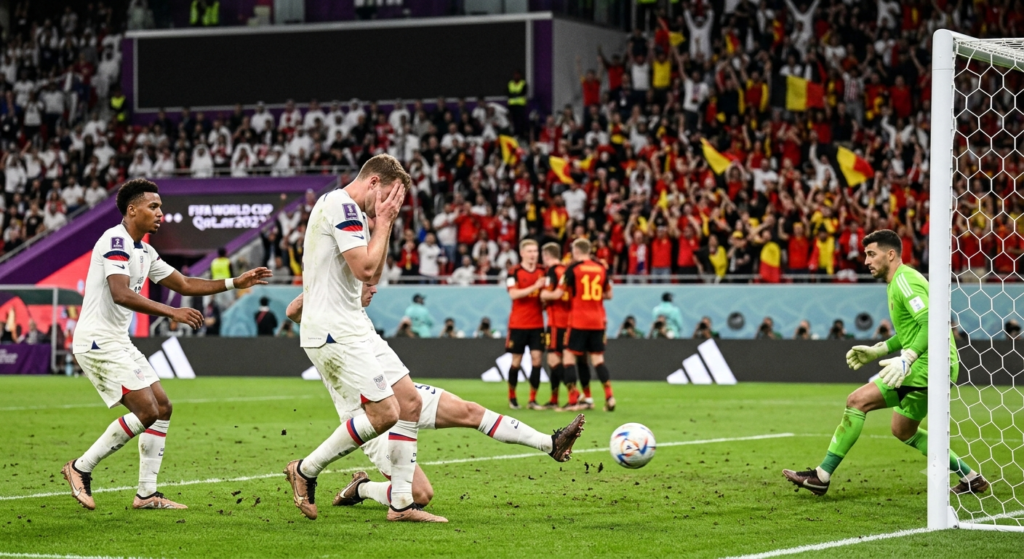
5. Post-Match Fallout: What the Players and Coach Said
The post-match press conference felt like an autopsic review. There were no excuses to hide behind, no controversial refereeing decisions to blame, and no bad bounces to point to. It was an objective, comprehensive beating.
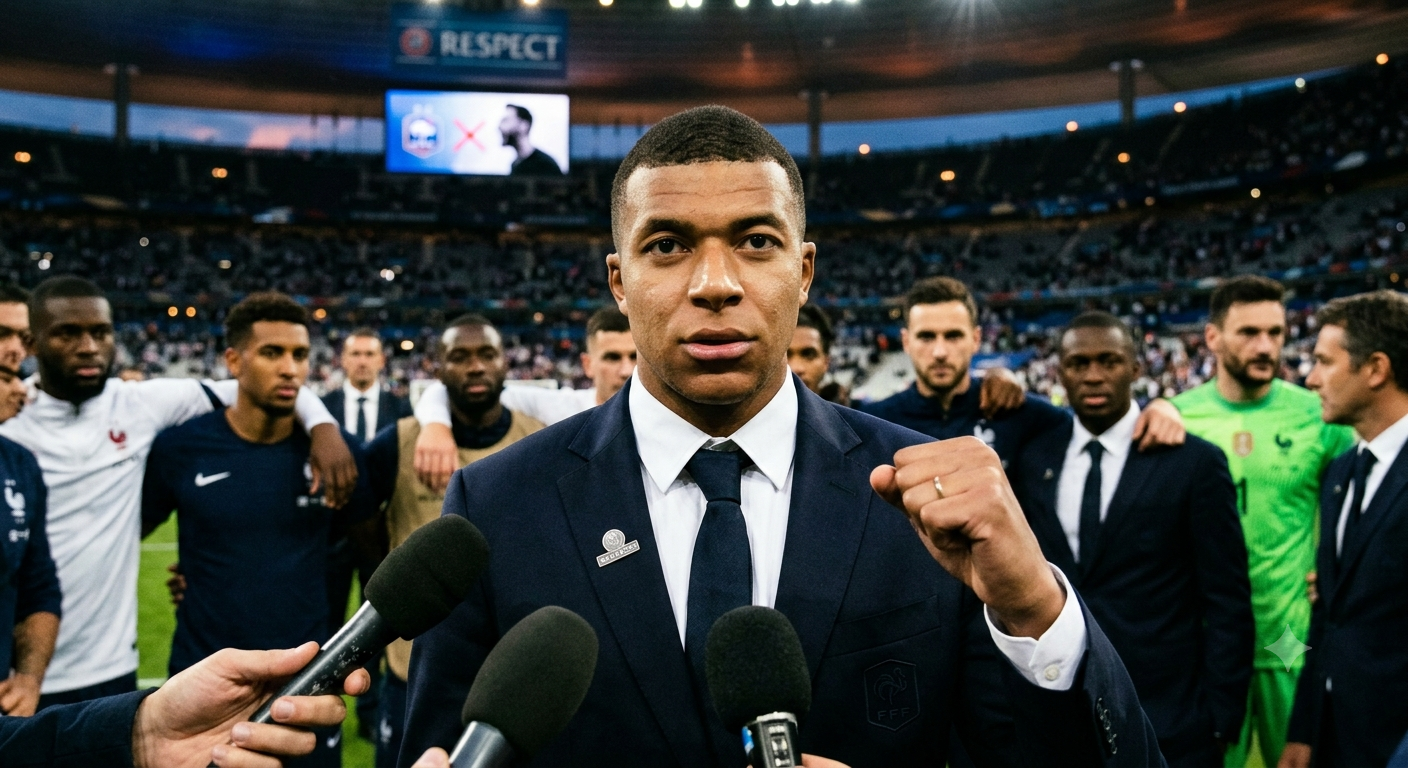
The U.S. manager stood at the podium looking visibly shell-shocked.
“At this level, you cannot give gifts,” he stated flatly. “We worked for four years to get to this point, and to give away goals in the manner we did tonight is unacceptable. We had a game plan, but a game plan only works if you execute the fundamentals of defending. We didn’t track runners, we didn’t win second balls, and we turned the ball over in catastrophic areas. The responsibility stops with me, but the players know that individual errors of that magnitude will eliminate you from any tournament in the world.”
The team captain was equally blunt, fighting back emotion in the mixed zone. “We let ourselves down, and we let the country down,” he said. “We felt the energy from the fans back home and in the stadium. To give put out a defensive performance like that after everything we’ve put into this cycle is heartbreaking. We lost our heads after the first mistake, and instead of tightening things up, we chased the game in a frantic way that played right into their hands. It’s going to take a long time to get over this one.”
6. The Broader Picture: What This Means for U.S. Soccer
This defeat is more than just a bad night at the office; it is a seismic event that will force a deep re-evaluation of the entire U.S. Soccer apparatus. For years, the federation has pointed to the growing number of American players starting for top-tier European clubs as definitive proof of progress. While that individual progression is real, this match exposed the massive gap that still exists in terms of international tactical maturity, defensive discipline, and tournament management.
The harsh reality is that the USMNT has developed an abundance of dynamic, athletic wingers and energetic box-to-box midfielders, but they have failed to produce elite, cold-blooded international center-backs or a truly world-class defensive anchor in the midfield.
The current pool of domestic talent excels when the game is open, chaotic, and transitional. But when forced to play structural, disciplined knockout football against an opponent that can read structural weaknesses in real-time, the team looks structurally fragile.
The Immediate Questions Facing the Federation:
- The Coaching Future: Does the current technical staff possess the tactical flexibility to guide this team out of its comfort zone, or is a world-class external perspective required to instil a more robust defensive identity?
- Roster Regeneration: Are the veteran defenders who formed the bedrock of this cycle capable of performing under pressure, or is it time to aggressively integrate younger, more agile profiles into the starting lineup?
- Developmental Philosophies: Does the domestic developmental pathway place enough emphasis on intellectual defending, positioning, and scanning, or is it overly focused on pure athleticism and technical flair on the ball?
7. Looking Forward: The Long, Arduous Road to Redemption
Redemption will not come quickly. The four-year cycle of international football is a grinding, unforgiving process. The sting of this 4-1 rout will linger over every training camp, every friendly, and every regional qualifier for the foreseeable future.
However, every great footballing nation has suffered a catastrophic tournament exit that served as the catalyst for systemic change. Germany had its existential crisis after Euro 2000; France rebuilt its entire infrastructure after failing to qualify for the 1994 World Cup. This humiliating exit must become the blueprint for the United States’ own defensive evolution.
The raw ingredients remain highly promising. The core of this roster is still exceptionally young and will enter their prime development years during the next cycle. They now possess something that cannot be taught in academy training sessions: the agonizing, firsthand scar tissue of a World Cup knockout disaster. They know exactly what failure feels like, what it looks like, and precisely how small the margin for error truly is when playing under the bright lights of the global stage.
To move forward, U.S. Soccer must move past the marketing hype and look squarely in the mirror. Glamour goals and viral skills look great on highlight reels, but defensive solidity, spatial awareness, and collective sacrifice are what lift international trophies. Until the United States learns to defend with the same passion and tactical sophistication with which it attacks, its ultimate footballing dreams will continue to be crushed by teams that do.
Explore deeper analysis of the USMNT World Cup exit:
Analyze the tactical changes needed for the next cycle
Compare this match to previous U.S. tournament exits
Review player ratings and individual performance metrics




Leave a Reply