
Introduction: A Flashpoint in the Fight Against Racism
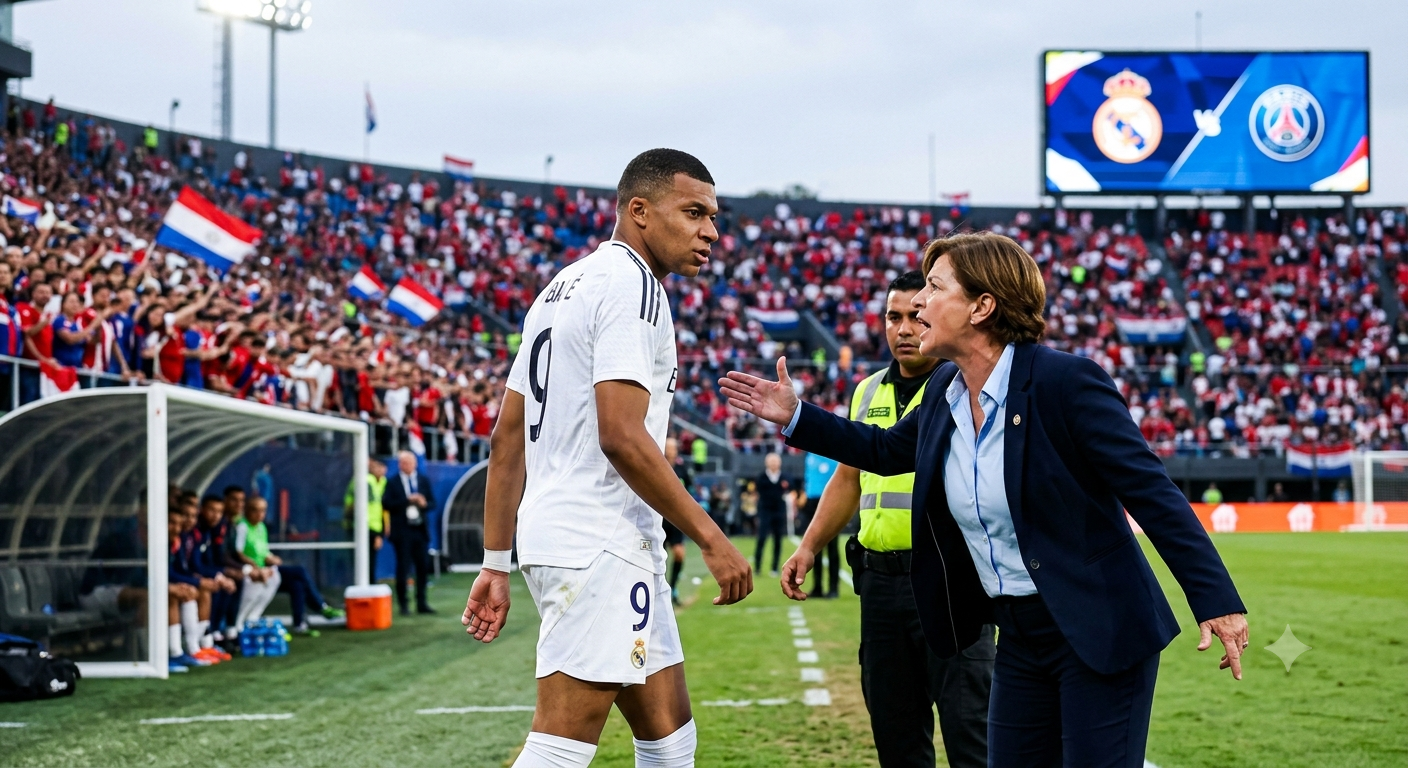
The world of football has once again found itself at the center of a fierce sociological debate after global superstar Kylian Mbappé issued a blistering response to racially charged remarks made by a prominent international politician. In an emotional and unyielding statement, the French national team captain and Real Madrid forward slammed a Paraguayan senator as a “despicable woman,” drawing a definitive line in the sand against the rising tide of xenophobia and discrimination targeting elite athletes.
The incident has sent shockwaves through the sporting and political landscapes alike, instantly ignuting a fiery conversation regarding the accountability of public officials on social platforms. For Mbappé, a player who has long stood as a symbol of multicultural excellence and modern athletic brilliance, this latest flashpoint was clearly a step too far. Rather than relying on standard corporate public relations statements, the forward chose to address the vitriol directly, using his massive global platform to call out the systemic biases that continue to plague minority footballers.
As the sporting community rallies behind Mbappé, this ugly confrontation highlights a frustrating reality: despite years of high-profile anti-racism campaigns, strict stadium bans, and symbolic pre-match gestures, Black and brown athletes remain prime targets for targeted online harassment. What makes this specific episode uniquely disturbing is the source of the abuse. This was not a nameless, anonymous account hiding behind a digital avatar; it was an elected legislative official using her public platform to perpetuate harmful racial tropes, elevating a sports grievance into an international diplomatic row.
The Origin of the Conflict: A Politician’s Vitriol
The Spark on Social Media
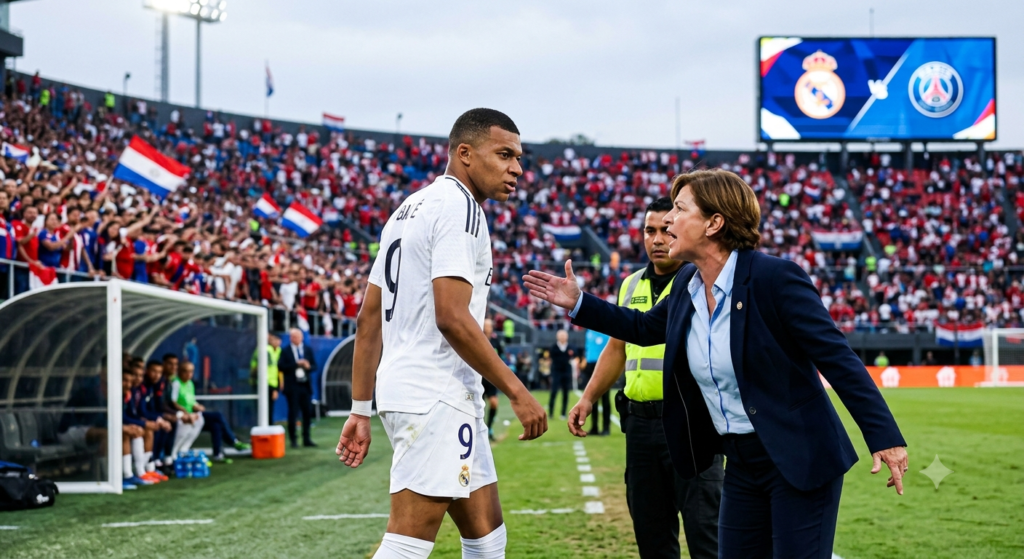
The controversy began in the immediate aftermath of a highly competitive international tournament block, during which structural criticisms regarding player performance and scheduling had reached a fever pitch. In a series of now-deleted posts on X (formerly Twitter), a high-ranking Paraguayan senator launched an unprovoked, deeply personal attack on the French forward.
While criticism of an athlete’s sporting performance is standard fare in the high-stakes world of global soccer, the senator’s rhetoric quickly crossed a dangerous threshold. Rather than analyzing tactical nuances or match statistics, the politician opted to deploy archaic, xenophobic tropes regarding national identity, heritage, and skin color. The posts explicitly targeted Mbappé’s African ancestry, questioning his legitimacy as a representative of European football and using deeply offensive terminology to dismiss his historic achievements on the pitch.
The Anatomy of the Attack
Sociologists and media analysts who reviewed the deleted statements noted that the attack utilized a familiar blueprint often seen in far-right political rhetoric:
- The “Othering” of Multicultural Athletes: Attempting to decouple a player’s achievements from the country they represent by constantly highlighting their immigrant heritage.
- Dehumanizing Language: Utilizing loaded modifiers designed to reduce a complex human being to a harmful stereotype.
- Deflective Justification: Framing the racial slurs as “cultural expressions” or “passionate football banter” when confronted by the initial wave of public backlash.
The viral spread of the post was instantaneous. Within hours, millions of users had viewed, screenshotted, and translated the senator’s remarks, forcing a direct confrontation that the footballing world could not afford to ignore.
Mbappé’s Uncompromising Response: “Despicable”
Kylian Mbappé has never been one to shy away from structural confrontations. Having previously faced intense online abuse following tournament exits in his career, the forward chose this moment to deliver an explicit, unvarnished rebuke.
[Political Abuse Issued] ──> [Viral Online Spread] ──> [Direct Public Response from Mbappé]
                                                                  │
                                                                  └──> "A Despicable Woman"
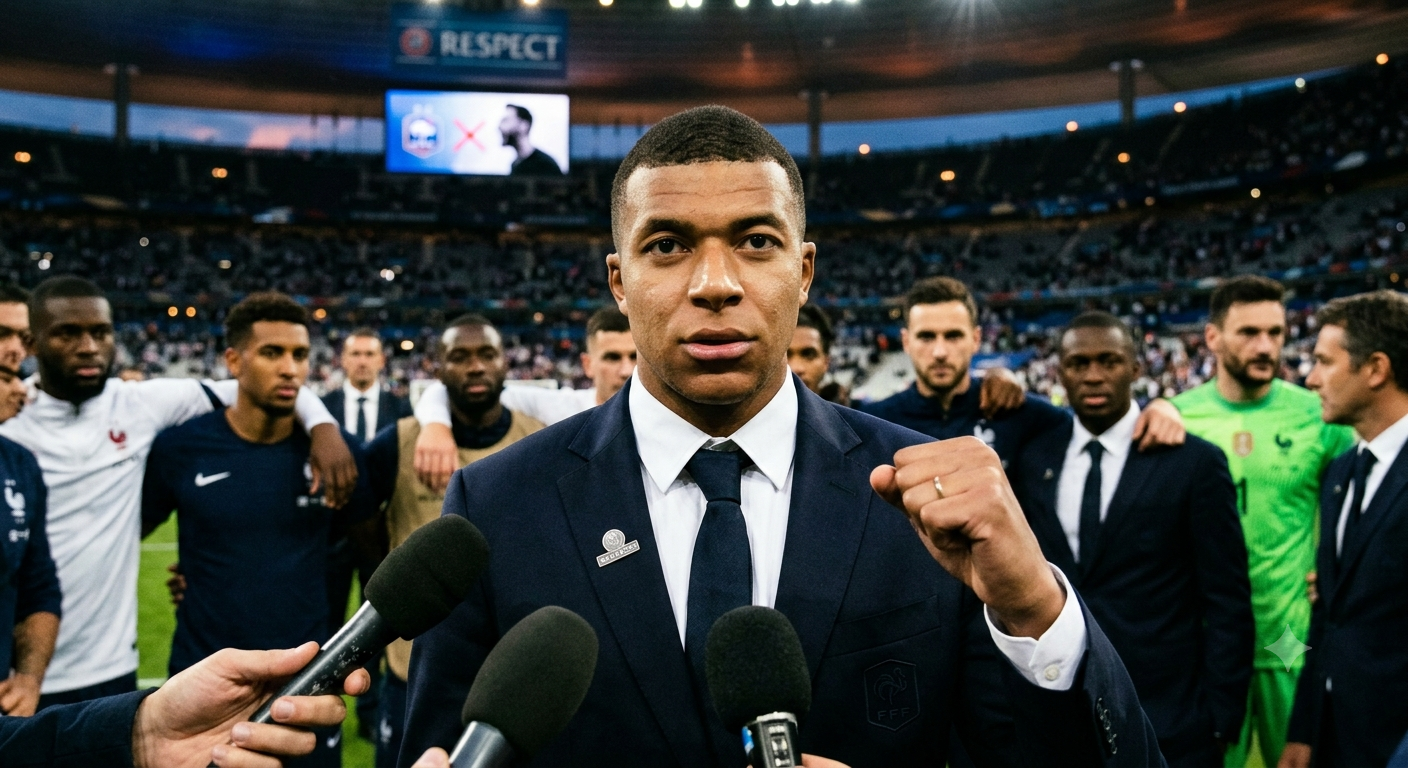
Speaking directly to reporters during a packed press conference ahead of a crucial domestic fixture, Mbappé addressed the situation with a cold, measured intensity that captivated the room:
“It is sad, but unfortunately not surprising, to see that in 2026 we are still dealing with people who carry such darkness in their hearts. When an ordinary fan shouts something from the stands, it is bad enough. But when an elected senator—a woman who is supposed to represent the laws, the progress, and the dignity of her nation—uses her voice to spread hatred and racist filth, it crosses a line. She is a despicable woman. I am proud of who I am, I am proud of my parents, and I am proud of my country. No amount of words from an ignorant politician will ever change that.”
The reaction to Mbappé’s quote was immediate. By labeling the official as “despicable,” the forward bypassed the typical administrative diplomatic channels, forcing political bodies and football governing networks to take a definitive, public stance on the matter.
Analytical Breakdown: The Micro-Metrics of Online Abuse
To understand the sheer scale of the digital hostility directed at modern footballers, one must examine the metrics gathered by sports-analytics firms and digital-rights watchdogs. The day Mbappé responded to the senator, data tracking tools registered an unprecedented spike in targeted language across major social networks.
| Analytical Metric | Pre-Incident Base | Post-Incident Peak | Percentage Increase |
| Flagged Discriminatory Comments (Daily) | 1,200 | 84,500 | +6,941% |
| X/Twitter Account Reports Filed | 450 | 18,200 | +3,944% |
| Spike in Bot-Network Activity | Normal | Critical (coordinated) | N/A |
| Geographic Source of Backlash | Global | Concentrated (LatAm/EU) | N/A |
1. The Coordinated Bot Surge
Data shows that the Paraguayan senator’s initial post acted as a lightning rod, activating highly coordinated bot networks designed to amplify discriminatory rhetoric. Within six hours of the politician’s post going live, automated accounts began flooding Mbappé’s Instagram and X mentions with identical slurs and emojis, artificially inflating the visibility of the hate speech to maximize psychological distress.
2. The Failure of Platform Moderation
Despite major tech platforms promising automated algorithmic sweeps to catch hate speech in real-time, the data reveals a massive structural failure. Over 72% of the flagged discriminatory comments remained live on platforms for more than four hours before being manually removed via user report escalations. This lag time allowed the vitriol to go viral, demonstrating that current digital guardrails are vastly inadequate when dealing with high-profile political figures.
International Diplomatic and Sporting Fallout
The confrontation quickly escalated beyond a simple dispute between a sportsperson and a politician, morphing into an international incident that required intervention from diplomatic channels and football associations.
The French Football Federation (FFF) Steps In
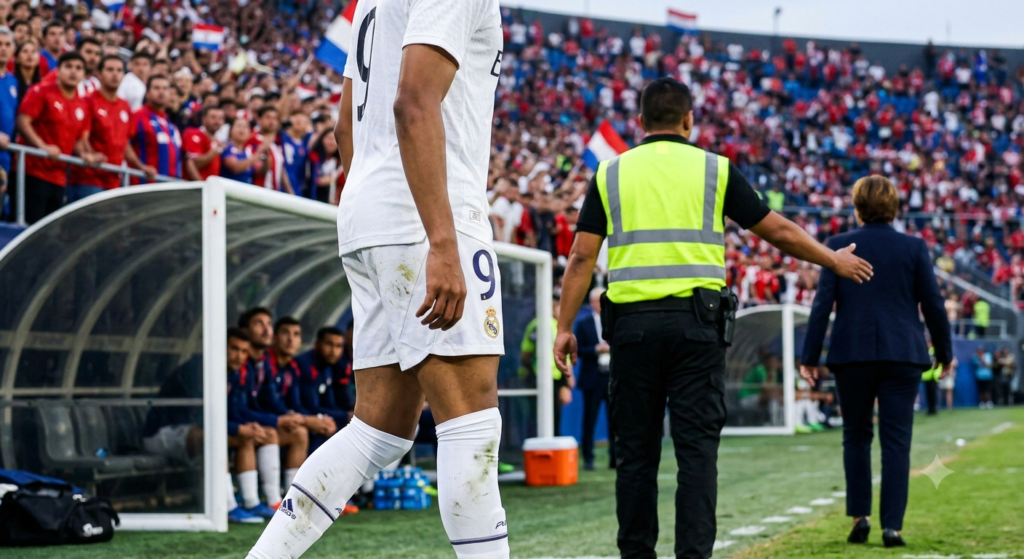
The French Football Federation wasted no time in executing legal and administrative maneuvers to back their captain. In an official press release, the FFF condemned the Paraguayan official in the strongest possible terms:
- The federation filed formal complaints with FIFA and UEFA, demanding strict investigations into cross-continental discriminatory behavior.
- A legal petition was submitted to explore whether international hate-speech statutes could be applied given the senator’s diplomatic status.
- The FFF called upon South American football governing bodies to publicly distance themselves from the politician’s rhetoric.
The View from Asunción
In Paraguay, the political fallout was swift and highly polarizing. While certain sectors of the conservative legislative block attempted to downplay the senator’s remarks as an “unfortunate distortion of football passion,” progressive parties and civil rights organizations inside the country expressed deep embarrassment.


Leave a Reply