
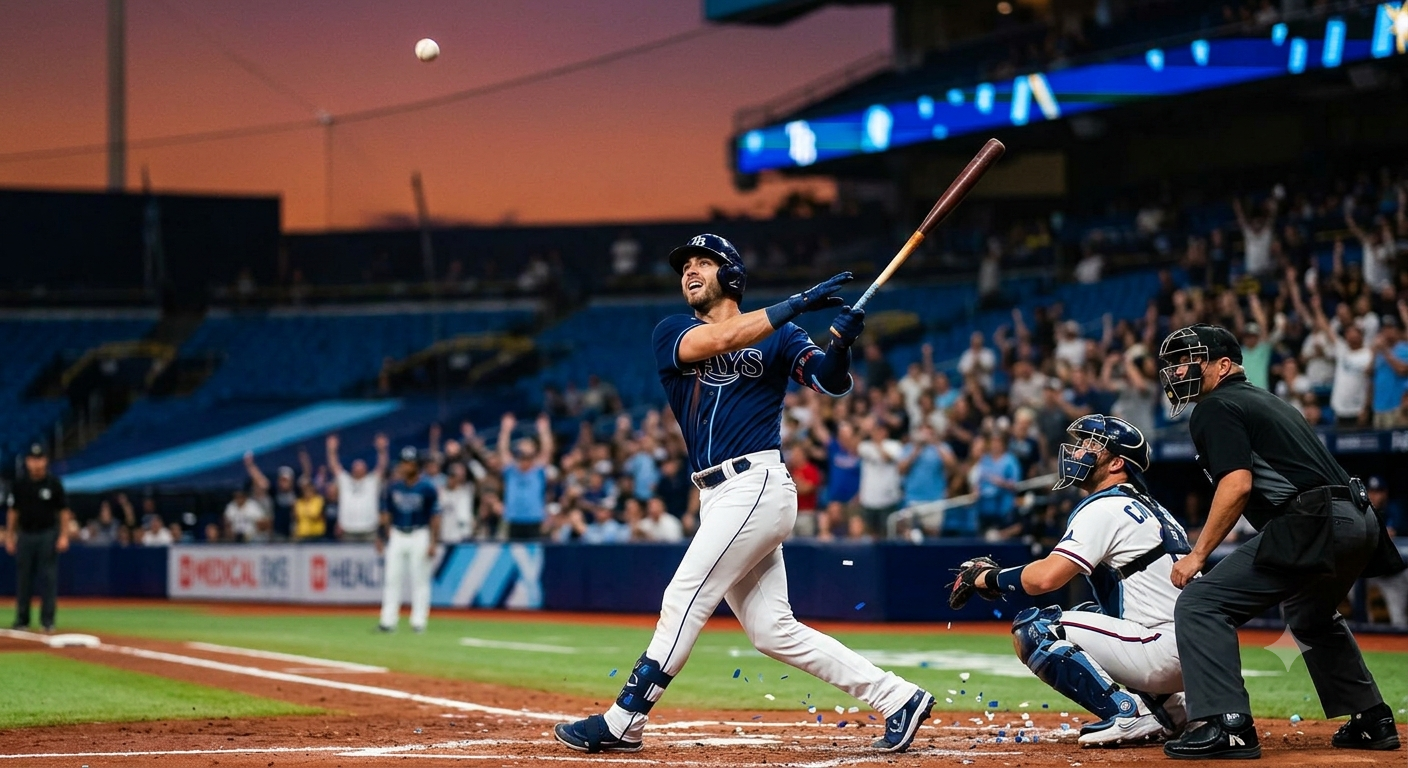
Introduction: A Defining Milestone in a Breakout Campaign
In the modern landscape of Major League Baseball, power is often measured by the sheer distance of a blast or the staggering exit velocity recorded by Statcast. Yet, for players who built their reputations on grit, elite defensive versatility, and chaotic base-running, a home run milestone represents something entirely different: evolution. When José Caballero stepped into the batter’s box and launched his 10th home run of the season, it wasn’t just another run on the scoreboard. It was a loud, definitive statement that his offensive game had reached a completely new stratosphere. By reaching double-digit homers for the first time in his Major League career, Caballero officially established a new personal best, shattering his previous benchmarks and forcing opposing pitching coaches to completely rewrite their scouting reports.
For a long time, the narrative surrounding Caballero was clear-cut. He was viewed as a high-energy utility piece—a spark plug capable of disrupting an opponent’s rhythm on the basepaths, drawing walks, and playing pristine infield defense. But the elite tier of modern baseball demands constant adaptation. Recognizing that utility players must provide occasional slugging to keep defenses honest, Caballero spent the offseason retooling his swing mechanics, optimizing his launch angle, and adding lean muscle mass. The results have spoken loudly all year, culminating in a powerful surge that has transformed him from a niche specialist into an indispensable everyday asset.
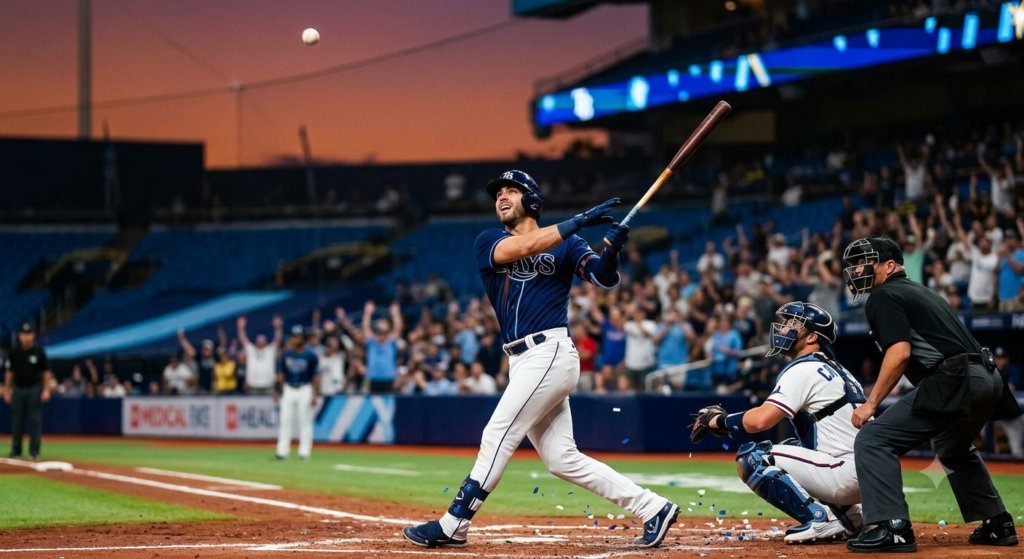
The Anatomy of the Milestone Blast
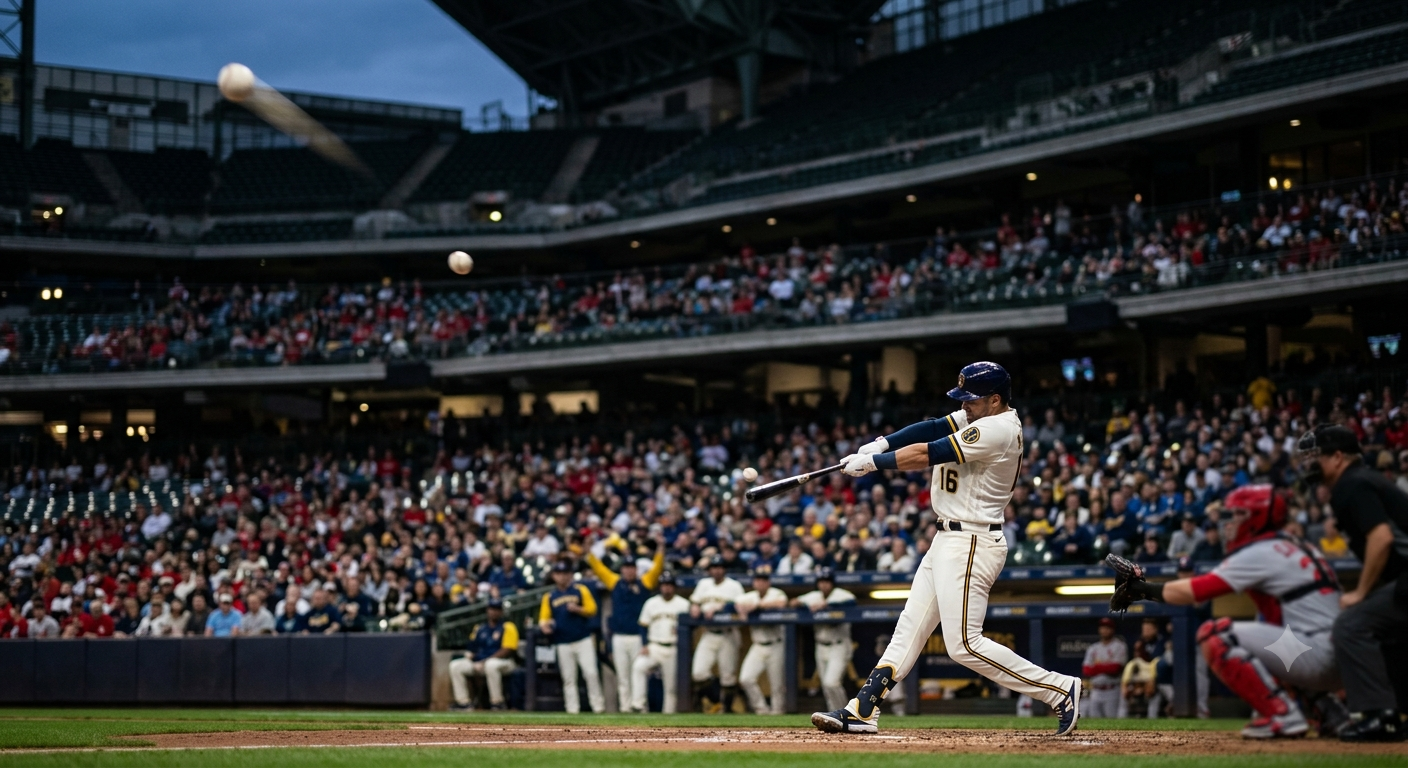
Every historic moment has its specific backdrop, and Caballero’s 10th home run was a masterclass in situational hitting and hitting adjustment. Facing a high-velocity relief specialist known for an oppressive upper-90s fastball and a biting slider, Caballero found himself in a high-leverage, deep-count battle. After fouling off consecutive pitches on the outer half of the plate, he forced the pitcher to come inside.
[Pitcher's Approach: High/Away Fastball] ──> Caballero Fouls Off, Stays Alive
[The Adjustment: Anticipating the Inside Slider] ──> Quick Hands, Tighter Bat Path
[The Result: 10th Home Run] ──> 102.4 mph Exit Velocity / 398 Feet to Left-Center
The pitch was a 94 mph hard slider that didn’t slide enough, leaking over the inner third of the plate. Displaying incredibly quick hands and a newly tightened bat path, Caballero cleared his hips perfectly. The sound off the bat was distinct—a sharp, resonant crack that instantly signaled a no-doubt blast. Statcast tracked the ball leaving the bat at an impressive 102.4 mph with a 28-degree launch angle, traveling 398 feet into the left-center field seats. As he rounded the bases, the dugout erupted, acknowledging not just the critical runs added to the board, but the immense personal milestone achieved by one of the team’s most dedicated workers.
From Spark Plug to Power Source: Tracking the Mechanical Evolution
To truly appreciate Caballero’s journey to 10 home runs, one must examine the stark contrast in his historical data. Throughout his minor league journey and his initial tastes of big-league action, his offensive profile was heavily weighted toward ground-ball production and line drives to the opposite field. While effective for maintaining a respectable on-base percentage, it limited his ability to drive the ball into gaps or clear fences consistently.
The Swing Overhaul
Working closely with the organization’s hitting coaches, Caballero made minor but highly impactful adjustments to his stance and load phase:
- Lower Body Foundation: He widened his base slightly, allowing for better weight transfer and a more explosive drive from his back hip.
- Hand Placement: His hands were moved slightly higher and closer to his body, shortening the distance the bat needs to travel to enter the hitting zone.
- Attack Angle: He eradicated a slight downward chop in his swing, replacing it with a flat-to-slight upward path designed to elevate the ball more frequently.
These changes did not compromise his elite contact skills. Instead, they allowed him to maximize his natural raw power when catching the ball out in front of the plate. By turning on inside pitches rather than fighting them off, his pull-side power blossomed, transforming warning-track flyouts into home runs.
Statistical Breakdown: Advanced Metrics Behind the Surge
The numbers tell an undeniable story of a player who has learned how to barrel the baseball with greater frequency and intent. Below is a comprehensive look at Caballero’s advanced metrics, comparing his current breakout campaign against his previous career averages.
| Statcast Metric | Past Career Averages | Current Milestone Season |
| Home Runs (HR) | 3 – 6 | 10 |
| Barrel Percentage (Barrel %) | 3.1% | 7.8% |
| Hard-Hit Percentage (95+ MPH) | 29.4% | 38.6% |
| Average Launch Angle | 9.2° | 14.5° |
| Pull Percentage (Pull %) | 36.2% | 46.1% |
1. The Elevation Factor (Launch Angle)
The most critical catalyst for Caballero’s power surge is the drastic evolution of his Average Launch Angle, which leaped from a modest 9.2 degrees up to a highly productive 14.5 degrees. In baseball terms, this shift represents a conscious departure from hitting routine grounders into the teeth of modern infield defenses. By consistently lifting the ball into the air, his hit probability expanded exponentially, especially when combined with his increased exit velocities.
2. Dictating the Terms (Hard-Hit & Barrel % Changes)
A common critique of slaps-and-dash hitters who attempt to add power is that their strikeout rates skyrocket due to over-swinging. Caballero completely bypassed this pitfall. His Hard-Hit Percentage jumped nearly ten full points to 38.6%, indicating that when he makes contact, he is hitting the ball with vastly superior authority. His Barrel % more than doubled, showing a refined ability to align the sweet spot of the bat with the incoming trajectory of the baseball.
The Strategic Impact on Opposing Pitching Staffs
Before this season, opposing managers held a relatively straightforward blueprint for navigating José Caballero. Pitchers could aggressively attack the strike zone with high, heavy fastballs, confident that even if he made contact, it was unlikely to result in extra-base damage. They focused on avoiding walks and keeping him off first base, where his elite speed could cause defensive panic.
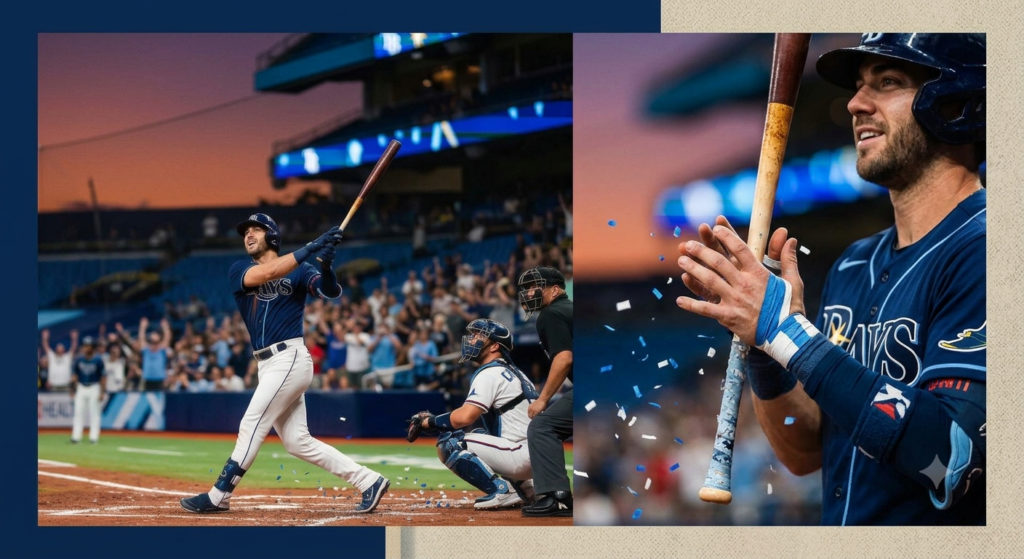
      [Old Scouting Report]                         [New Scouting Report]
  Attack zone with impunity                     Proceed with extreme caution
  Pound inner half with fastballs   ───>        Avoid leaving breaking pitches over the plate
  Focus purely on preventing walks              Account for legitimate pull-side home run power
That blueprint has been permanently burned. By proving he can punish mistakes over the fence, Caballero has altered how pitchers must approach him. They can no longer afford to throw “get-me-over” breaking balls or careless fastballs on early counts. This newfound respect has reaped secondary rewards: as pitchers tread more carefully around the edges of the zone, Caballero’s walk rate has stabilized, and he is seeing better pitches to hit when ahead in the count.
The Psychological Dimension of the Power Breakout
Sports psychologists frequently emphasize that confidence in baseball is an active variable, fluctuating based on tangible reinforcement. For a utility player fighting every year for a guaranteed roster spot, hitting a home run is a massive psychological validator.
When Caballero hit his fifth and sixth homers early in the season, it proved to him that his offseason mechanical adjustments were functional against major-league pitching. By the time he reached his 10th, the mental barrier associated with being a “singles hitter” was entirely demolished.
[Early Season HRs] ──> Structural Validation ──> Trust in Swing ──> Aggressive Zone Hunting ──> 10th HR Milestone
This mental freedom allows an athlete to play with an elevated level of controlled aggression. Instead of stepping into the box with a defensive mindset—merely trying to put the ball in play—Caballero now hunts specific pitches in designated zones, confident that he possesses the torque and bat speed to drive them out of any ballpark.
Roster Dynamics: Why Every Contender Needs a José Caballero
In an era governed by rigid roster construction and luxury tax thresholds, positional flexibility is the ultimate organizational luxury. The ability to plug a single player into second base, shortstop, or third base without experiencing a catastrophic drop-off in defensive run value is incredibly rare.
However, historically, the trade-off for carrying a super-utility player was a massive offensive black hole near the bottom of the batting order. Teams simply accepted that their utility infielder would hit .220 with negligible power in exchange for defensive stability.
Caballero’s current production completely shatters that outdated paradigm. By coupling his defensive wizardry and base-running threats with 10-home-run pop, he has elevated his value from a luxury bench piece to a legitimate cornerstone starter. He allows managers to rest high-priced superstars without sacrificing offensive continuity, balancing the lineup and providing reliable length to the batting order.
Conclusion: Setting the Stage for the Next Chapter
José Caballero’s 10th home run of the season will be logged in the history books as a career-high milestone, but those who watch his daily preparation understand it is merely a signpost of what is yet to come. The transition from a defense-first reserve to a double-digit home run threat is a testament to tireless work ethic, smart analytical applications, and unwavering self-belief.
As the season marches into its most critical stretch, Caballero’s evolution gives his team a dynamic, multi-layered weapon that opposing clubs simply cannot ignore. He can beat an opponent with a spectacular diving stop in the hole, ruin a pitcher’s focus with a daring delayed steal, or, as he vividly demonstrated with his milestone blast, change the complexion of a game with one explosive swing of the bat. The power surge is real, the career high is established, and the future of José Caballero has never looked brighter.








Leave a Reply