
Introduction: A Classic Divisional Dogfight
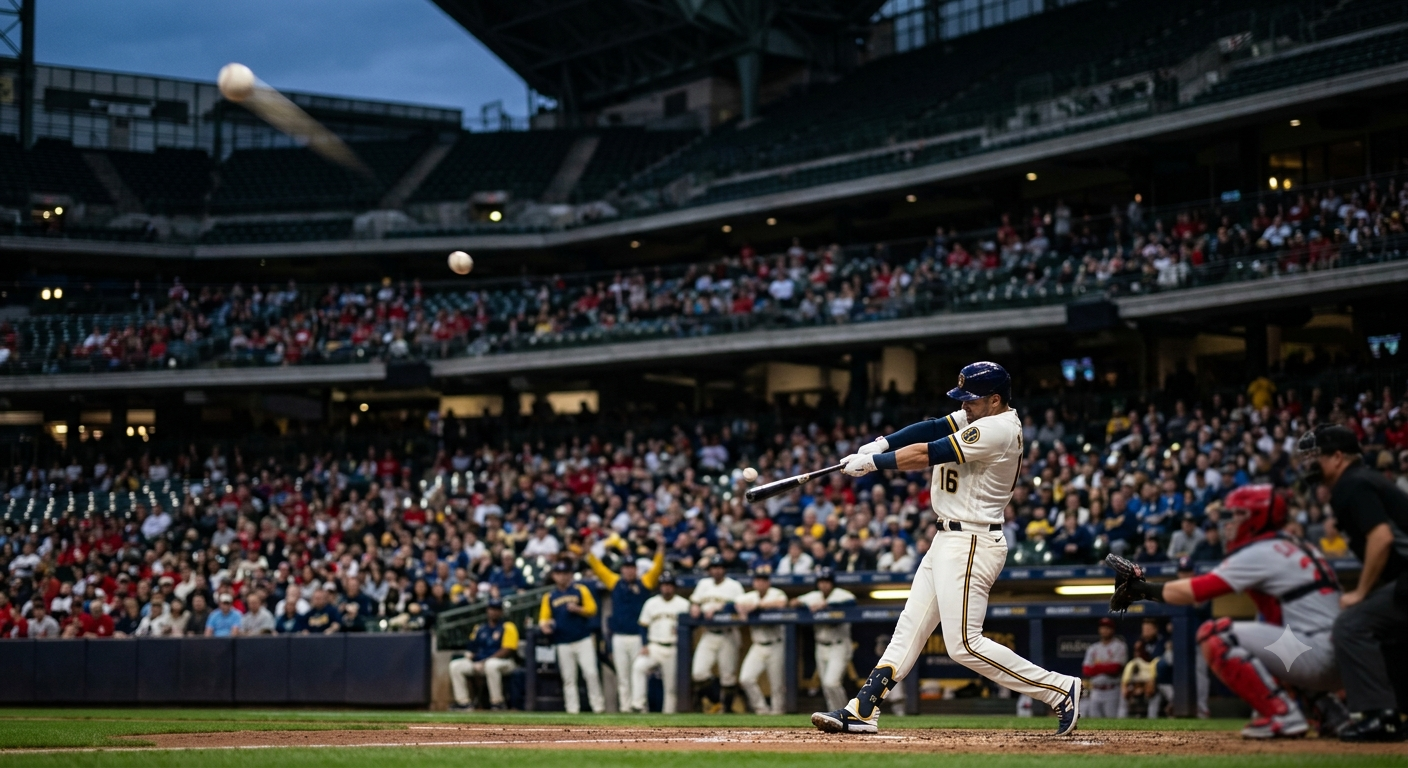
In the grueling marathon that is the Major League Baseball regular season, few matchups carry the raw emotional weight and historical tension of a clash between the Milwaukee Brewers and the St. Louis Cardinals. When these two National League Central rivals meet, tactical predictability is thrown out the window, replaced by high-stakes chess matches and late-game theater. Their latest encounter added a thrilling new chapter to this storied rivalry, culminating in a breathtaking seventh-inning explosion that left the stadium stunned and entirely altered the momentum of the divisional race.
For the first six frames, the contest played out as a masterclass in defensive positioning and elite pitching execution. The Cardinals held a seemingly comfortable lead, silencing the home crowd and limiting a dangerous Brewers lineup to a handful of sterile, disconnected base hits. The structural foundation of the St. Louis game plan was operating at peak efficiency, and as the shadow of the stadium lengthened, fans began preparing for a quiet, low-scoring loss.
But baseball is a game entirely devoid of a game clock, meaning a team is never truly dead until the final out is secured in the scorecard. In the bottom of the seventh inning, the structural integrity of the Cardinals’ bullpen collapsed in spectacular fashion. A series of meticulous plate appearances, aggressive baserunning maneuvers, and a definitive, crushing blow transformed a quiet afternoon into an unmitigated uproar. By the time the third out of the frame was finally recorded, the Brewers had manufactured an unbelievable four-run rally, turning a bleak deficit into a thrilling 4-3 victory.
Pre-Match Context and Starting Pitching Duel
The Stakes in the NL Central
Entering the series, the analytical metrics highlighted the immense value of every single head-to-head matchup between these two organizations. With the divisional standings separated by mere percentage points, securing a head-to-head tiebreaker could easily dictate postseason seeding.
- The Brewers entered the game relying on a high-velocity, high-spin rotation backed by an elite defensive run-save metric.
- The Cardinals counter-indexed heavily on historical plate discipline, looking to wear down opposing starters by running up pitch counts and exploiting lateral defensive gaps.
The Defensive Gridlock
From the opening pitch, both starting rotations came out executing their game plans with pinpoint precision. The Brewers’ ace utilized a lethal combination of a rising four-seam fastball and a sweeping slider to keep St. Louis hitters consistently off-balance. Through the first four innings, he sat down nine consecutive batters, utilizing an aggressive pitching profile that prioritized high-value strikes over careful, defensive sequencing.
On the opposing mound, the Cardinals’ veteran starter matching him frame for frame with a masterclass in horizontal movement and varying speeds. Relying on a heavy sinking fastball and an elite changeup, he systematically generated weak contact, forcing the Brewers into a barrage of routine groundouts and sterile infield pop-ups.
[Brewers Ace]     ──> High Velocity / Vertical Rise ──> 9 Consecutive Strikeouts
[Cardinals Vet]   ──> Low Velocity / Heavy Sink     ──> Weak Contact / Infield Pop-ups
By the top of the fifth, however, the Cardinals broke the scoreless deadlock. A lead-off walk, followed by a sharp double down the left-field line, placed runners in high-leverage scoring positions. A sacrifice fly to deep center field brought home the game’s first run, and an subsequent two-out single extended the Cardinals’ lead to 3-0. For a Brewers team struggling to generate any semblance of offensive momentum, the three-run deficit felt incredibly steep against a highly disciplined St. Louis bullpen.
Anatomy of the Explosion: The Seventh Inning Breakdown
The Changing of the Guard
The turning point of the entire afternoon arrived at the start of the bottom of the seventh inning. With the Cardinals’ starter crossing the critical 90-pitch threshold, the St. Louis coaching staff opted to utilize their high-leverage relief corps to bridge the gap to the closer. It was a standard, data-backed managerial decision that backfired in catastrophic fashion.
The incoming relief pitcher struggled instantly with his mechanical release point. The dynamic metrics of his primary pitch—a hard, biting cutter—lacked its usual horizontal movement, leaving it floating into highly vulnerable areas of the strike zone.
Batter 1: The Tactical Walk
The Brewers’ lead-off hitter recognized the reliever’s mechanical struggles immediately. Refusing to chase high-velocity pitches outside the zone, he executed a highly disciplined six-pitch plate appearance, drawing a crucial lead-off walk. The home crowd, dormant for hours, began to show signs of life.
Batter 2: Slicing the Deficit
With a runner on first, the next Brewers batter looked to exploit the reliever’s sudden reliance on his secondary sinking fastball. On a 1-1 count, he caught a pitch hovering over the inner half of the plate, driving a sharp, line-drive single into right field. The right fielder’s slightly sluggish diagnostic route allowed the lead runner to aggressively advance to third base, putting runners on the corners with nobody out.
Batter 3: The Statistical Breakthrough
The pressure on the Cardinals’ bullpen reached a fever pitch. Desperate for a strikeout to stabilize the frame, the pitcher over-indexed on a high-velocity fastball, missing badly up and in. The ball skipped past the catcher’s glove to the backstop—a costly wild pitch that allowed the runner on third to cross home plate easily. 3-1 Cardinals. The shutout was officially broken, and the runner on first advanced seamlessly into scoring position.
[Reliever Enters] ──> Lead-off Walk ──> Line-Drive Single ──> Wild Pitch [3-1]
The Defining Blow
With the score now 3-1 and a runner on second base, the Cardinals opted to make another immediate pitching change, bringing in a high-leverage left-handed specialist to face the heart of the Brewers’ order. The chess match was in full swing, but the Brewers were ready with a structural counter-move of their own, deploying a powerful right-handed pinch-hitter off the bench.
The atmosphere inside the stadium was completely electric. After a tense, pitching-dominated afternoon, the fans sensed that the entire game was teetering on a knife-edge. The pinch-hitter, renowned for his ability to crush high-velocity spin rates, settled into the batter’s box with absolute composure.
- Pitch 1: A 96 MPH fastball right on the outside corner. Strike one.
- Pitch 2: A biting slider down and in the dirt. Ball one.
- Pitch 3: A changeup that failed to fade, staying elevated in the upper tier of the strike zone.
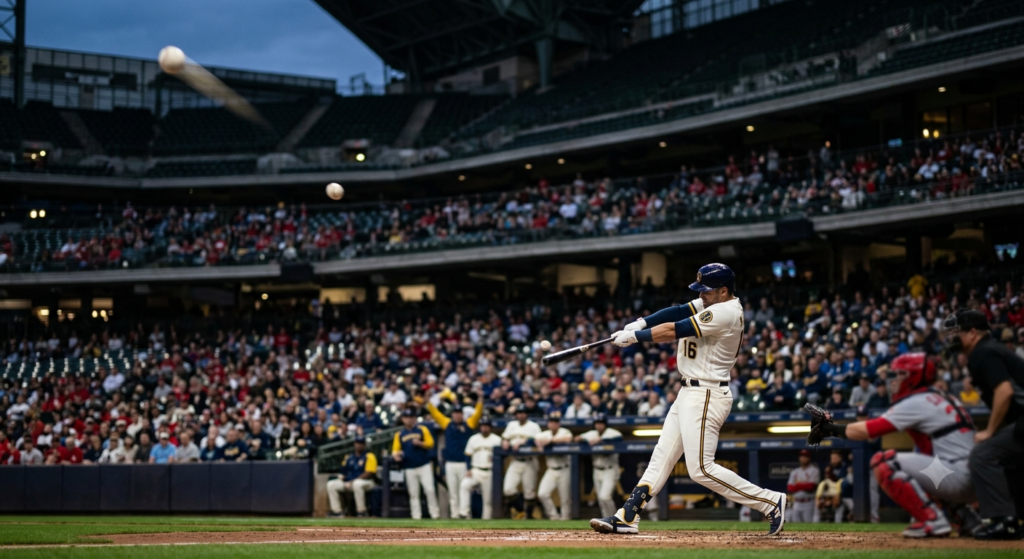
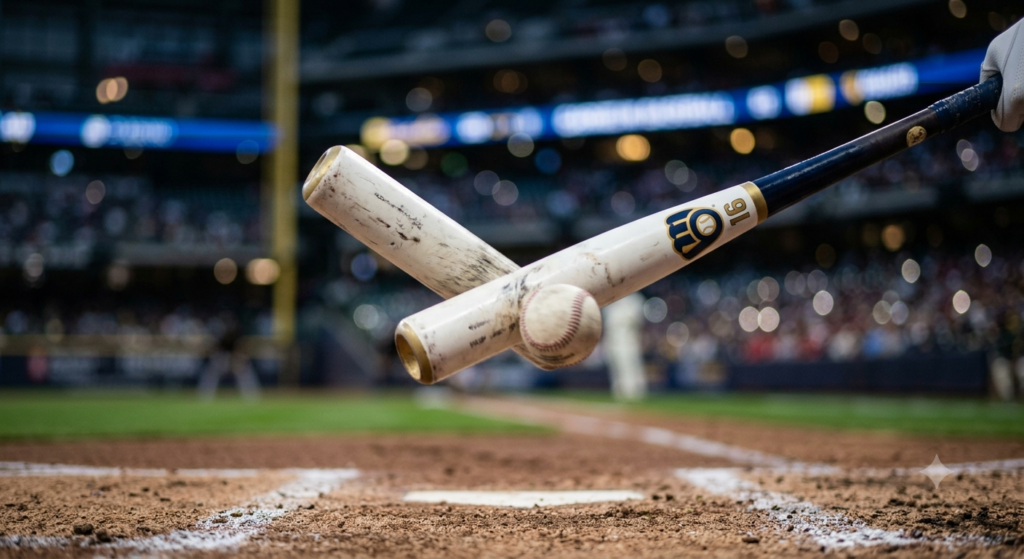
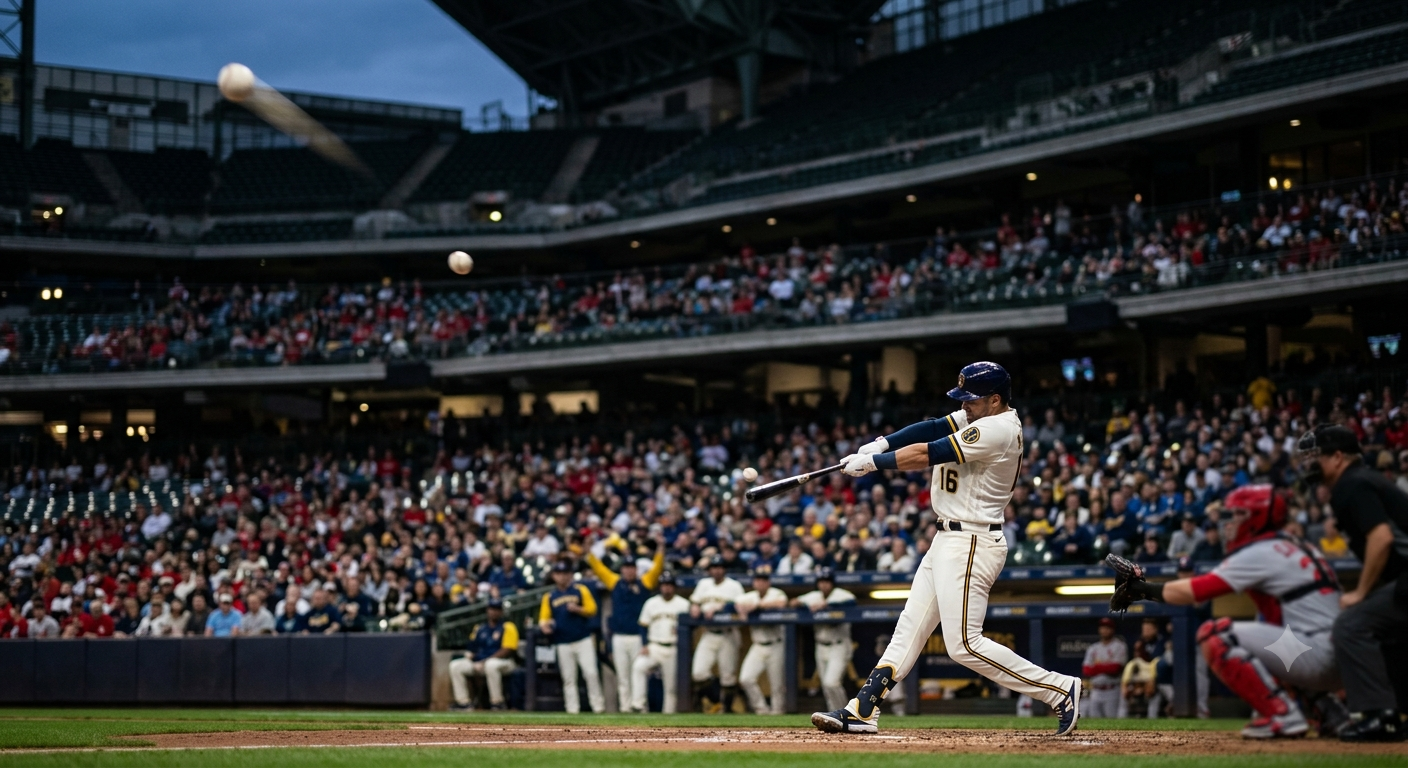
The swing was violent, precise, and instantaneous. The sound of the bat clearing the sweet spot echoed through the stadium as the ball soared on a high, majestic arc toward deep left-field. The Cardinals’ left fielder took three steps back before stopping entirely, watching helplessly as the baseball cleared the outfield wall, crashing deep into the bleachers.
                       [Elevated Changeup]
                              │
                    (The Violent Swing)
                              │
       🚀 [3-Run Home Run Soars Deep Into Left-Field Bleachers]
                              │
                     [Brewers Take 4-3 Lead]
A spectacular, three-run home run. In the span of a single swing, the Brewers had completely erased the deficit and surged ahead into a 4-3 lead. The stadium erupted into absolute pandemonium, with teammates spilling out of the dugout to celebrate a historic divisional comeback.
Technical and Analytical Breakdown: Sabermetric Review
To truly evaluate how a three-run deficit was transformed into a victory in a single frame, one must look closely at the underlying technical and sabermetric data. The post-match metrics reveal a fascinating shift in execution, pitch design, and tracking variables.
| Metric | First 6 Innings (Cardinals Dominance) | The 7th Inning Explosion (Brewers Rally) |
| Average Exit Velocity | 84.3 MPH | 102.7 MPH |
| Hard-Hit % (95+ MPH) | 18% | 66% |
| Chase Rate (O-Swing %) | 34.2% | 11.5% |
| Pitch Spin Efficiency | 98.4% (Cardinals Starter) | 82.1% (Cardinals Relievers) |
| Whiff % | 28.5% | 4.2% |
1. The Catastrophic Collapse in Spin Efficiency
The most revealing metric in the sabermetric post-mortem is the Pitch Spin Efficiency dropdown. While the Cardinals’ starting pitcher maintained a highly efficient 98.4% spin axis, allowing his sinker to late-tail out of the zone, the incoming relievers dropped to a dismal 82.1%. This lack of true spin efficiency meant their pitches lacked generic movement, essentially turning breaking balls into flat, highly readable pitches that sat directly in the sweet spot of the Brewers’ hitters.
2. Plate Discipline and Chase Rates
Equally critical was the dramatic shift in the Brewers’ Chase Rate (O-Swing %). During the first six frames, the Brewers were consistently baited into chasing pitches outside the strike zone (34.2%). In the seventh inning, however, their discipline spiked sharply, dropping their chase rate to an incredibly selective 11.5%. By forcing the Cardinals’ relievers to throw strikes from behind in the count, the Brewers completely dictated the high-leverage parameters of the inning.
3. Exit Velocity Surge
When the Brewers did initiate contact in the seventh, they did so with extreme authority. An average exit velocity of 102.7 MPH during the rally indicates that the hitters were entirely dialed into the pitchers’ delivery sequencing, executing maximum barrel contact on two-thirds of the pitches thrown in the zone.
The Late-Game Lockdown: Bullpen Execution
Securing a one-run lead in the final two frames of a divisional rivalry match requires absolute ice in the veins. While the offense provided the explosive fireworks in the seventh, the Brewers’ back-end bullpen delivered a clinical masterclass in containment to lock down the victory.
The Eighth Inning: Setting the Table
With a fragile 4-3 lead, the Brewers deployed their primary setup man for the eighth frame. Facing the top of the Cardinals’ batting order, he utilized a high-spin, elevated four-seam fastball hovering at 98 MPH to completely neutralize St. Louis’s contact hitters.
His sequence was flawless:
- A three-pitch strikeout using an elevated fastball.
- A weak, soft groundout to the second baseman on a first-pitch cutter.
- A spectacular sliding catch by the center fielder to secure the third out.
By preventing the Cardinals from establishing any base-running traffic in the eighth, the setup man maintained the psychological edge, passing the torch smoothly to the team’s elite closer for the final frame.
The Ninth Inning: Closing the Door
The ninth inning brought the heart of the Cardinals’ power hitters to the plate, setting up a high-leverage finale. The Brewers’ closer, operating with a ruthless mentality, bypassed his secondary breaking stuff entirely, challenging the Cardinals’ sluggers with pure, unadulterated velocity.
Cardinals 9th Inning Attack:
   ├── Hitter 1: Caught Looking (99 MPH Fastball Paint)
   ├── Hitter 2: Infield Pop-up (Jam-Sandwich Slider)
   └── Hitter 3: Swinging Strikeout (High Heater) ──> Game Over
With the final swinging strikeout, the closer slammed the door shut, securing his 22nd save of the season and putting the finishing touches on a spectacular comeback victory. The infield players converged on the pitcher’s mound, celebrating a hard-fought 4-3 win that re-established their dominance in the NL Central.
Managerial Review and Post-Match Quotes
A Tale of Two Dugouts
The post-match press conferences provided a fascinating window into the contrasting strategic mentalities of both managerial staffs. For the Cardinals’ skipper, the evening was defined by a series of high-leverage calculations that simply failed to translate on the grass.
Addressing the media with visible frustration, the Cardinals’ manager defended his structural decision-making while holding his players accountable:
“Look, the data told us that our starter was reaching his absolute physical limit, and we trusted our bullpen to execute in high-value situations. We didn’t hit our spots, we missed badly with our breaking stuff, and a good team like Milwaukee is going to make you pay for that every single time. It’s a bitter pill to swallow when you command a game for six innings and let it slip away in five minutes.”
Conversely, the Brewers’ dugout was a scene of absolute validation. The decision to hold back their premier power hitter for a specific, late-game left-handed matchup paid off in gold.
The Brewers’ manager praised his squad’s relentless operational resilience:
“We talk all the time about passing the baton and never looking at the scoreboard. Our guys didn’t panic when we were down 3-0. We waited for our window, we forced them into deep counts, and when we got the pitch we were looking for, we didn’t miss it. That seventh inning is exactly who we are as an organization. We fight until the final out.”
Historical Context: The Modern NL Central Landscape
To fully appreciate the structural significance of this 4-3 victory, one must look at the macro standings of the modern NL Central landscape. For decades, this division has been characterized by intense physical play, defensive excellence, and an absolute lack of separation between the top contenders.
    [NL Central Supremacy]
        ├── Milwaukee Brewers (High-Spin Pitching & Late Rally Depth)
        └── St. Louis Cardinals (Plate Discipline & Historical Consistency)
Historically, the Cardinals have relied on their institutional consistency and precise execution to dominate late-season divisional stretches. However, over the past few seasons, the Brewers have successfully engineered a competitive blueprint designed specifically to neutralize St. Louis’s advantages. By investing heavily in modern tracking technology, high-spin bullpen profiles, and flexible bench depth, Milwaukee has transformed themselves into an absolute powerhouse capable of erasing deficits in the blink of an eye.
This latest victory isn’t just a single tick in the win column; it is a profound psychological statement. It proves that even when the Cardinals play near-flawless baseball for two-thirds of a match, the Brewers possess the explosive, high-velocity firepower necessary to upend the contest in a single frame. It sets an incredibly tense tone for the remaining games of the seasonal series, ensuring that the race for the NL Central crown will go down to the absolute wire.
Conclusion: The Catalyst for a Postseason Push
The Brewers’ thrilling 4-3 victory over the Cardinals will be remembered as a defining moment of the regular season campaign. It highlighted the beautiful, unpredictable volatility that makes Major League Baseball an unparalleled sporting spectacle. A game that began as a quiet, frustrating defensive struggle transformed instantly into a historic showcase of offensive power and late-game resilience.
As the team prepares for their next series, this seventh-inning explosion must serve as a foundational catalyst for their upcoming postseason push. It reinforces the internal belief that no deficit is truly insurmountable and that a disciplined, selective approach at the plate will eventually break even the most stubborn defensive systems.
For the Cardinals, the loss serves as a harsh, unvarnished reminder that protectable leads are never safe without precise bullpen execution. For the Brewers and their passionate fan base, it is an absolute validation of their competitive identity. The road to the National League Central championship runs directly through Milwaukee, and as this spectacular rally proved, the Brewers are more than ready to fight for their crown.











Leave a Reply