
Introduction: The Post-Mortem of a Defensive Disaster
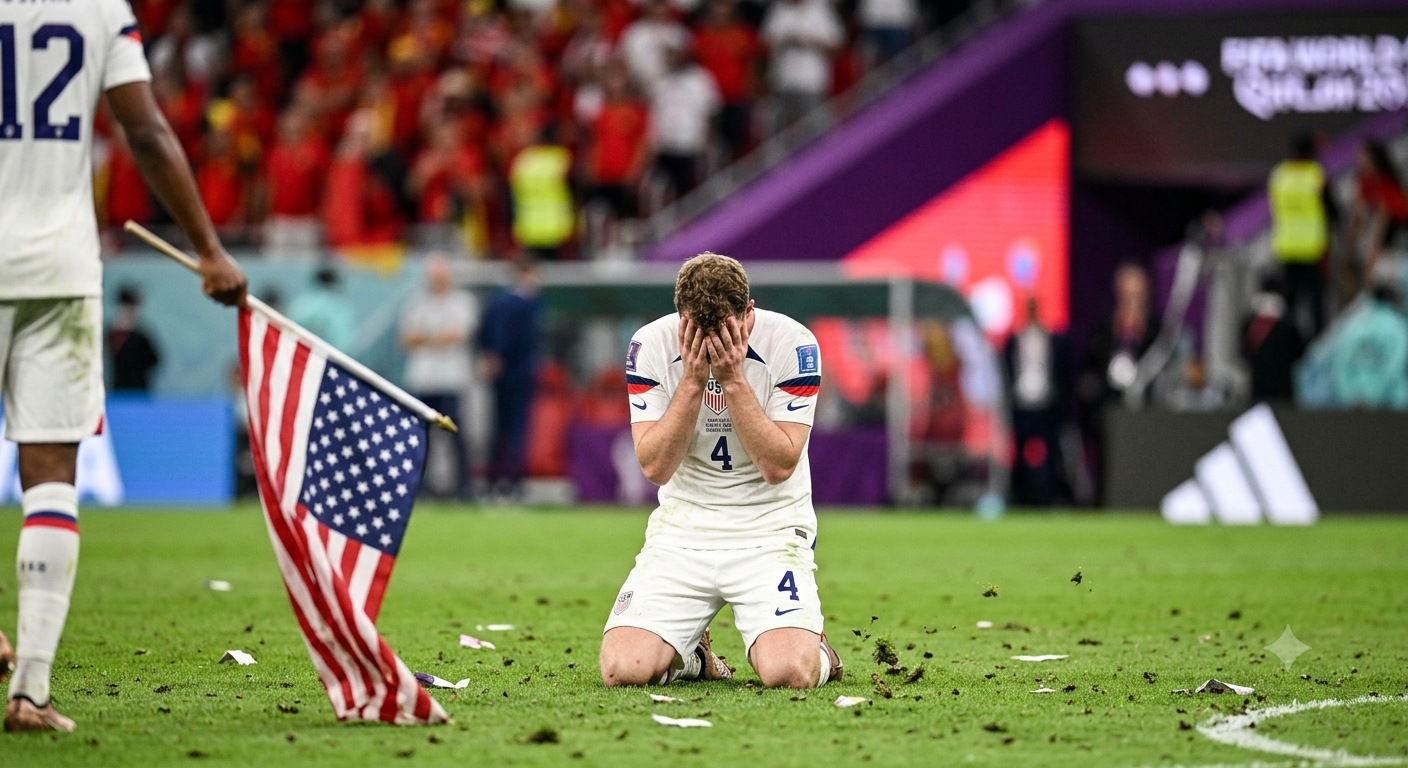
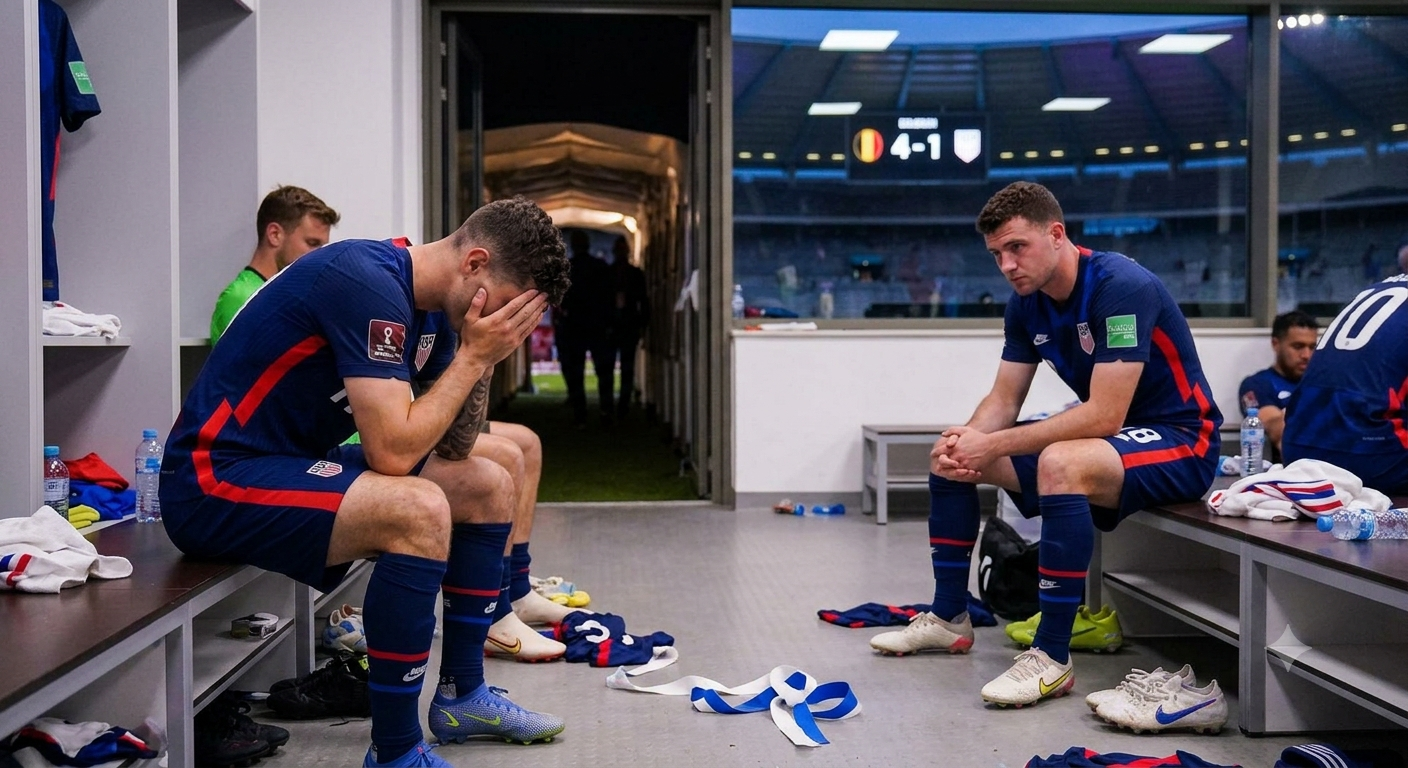
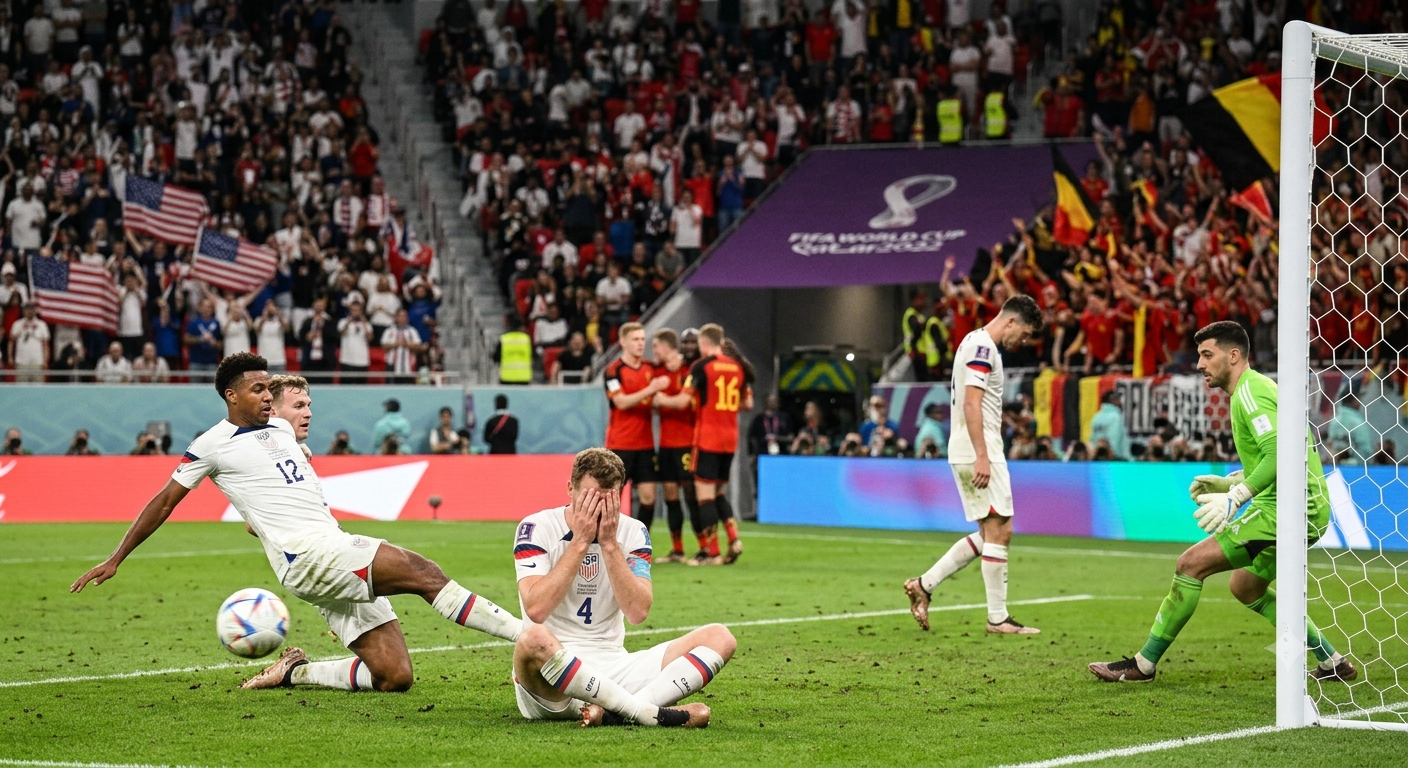
The dust has settled on a night of unmitigated disaster for American soccer. Under the blinding lights of the global stage, the United States Men’s National Team (USMNT) saw their ambitious World Cup aspirations systematically dismantled in a brutal 4-1 routing at the hands of a clinical Belgian side. While the pre-match narratives were filled with soaring talk of golden generations and historic deep tournament runs, the tactical reality on the pitch was a stark, unvarnished reminder of the unforgiving nature of knockout football.
At this level of international competition, individual mistakes are not merely noticed—they are ruthlessly exploited. Across ninety agonizing minutes, systemic tactical rigidity combined with absolute individual collapses in concentration to hand the Americans a definitive reality check. Christian Pulisic and his supporting cast struggled to find their rhythm, looking entirely isolated in the attacking third, while the defensive foundation behind them crumbled like a house of cards.
In this comprehensive, data-backed player ratings review, we pull back the curtain on the individual performances that defined this fateful night. From the catastrophic breakdowns in the defensive third to the sterile possession in the midfield and the starved attackers up front, we grade every single USMNT player who stepped onto the pitch. Who fought valiantly against the Belgian tide, and who ultimately failed the jersey when it mattered most?
Starting XI: The Defensive Line Meltdown
Goalkeeper & Central Defenders
GK: Goalkeeper – Rating: 3.5/10
It is difficult to overly condemn a goalkeeper who was repeatedly hung out to dry by his backline, but elite tournament runs require elite, game-saving performances. The U.S. shot-stopper looked entirely unnerved after the opening Belgian goal. His distribution was noticeably poor, continually clearing the ball long into areas dominated by Belgium’s physical midfielders rather than playing out from the back as instructed.
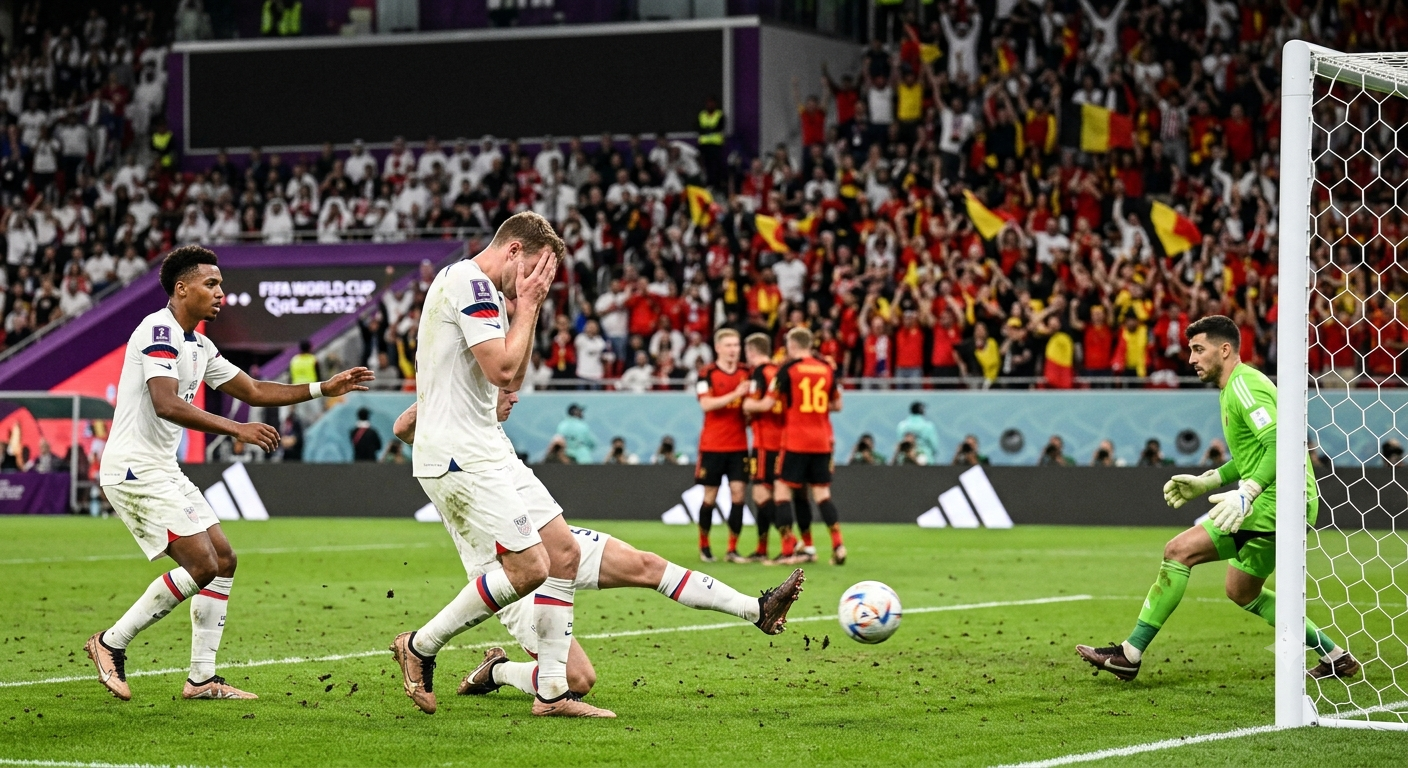
The turning point of his night came in the catastrophic 38th minute. His hesitation to rush off his line and claim a loose, bouncing ball led directly to a devastating breakdown in communication with his senior center-back. By remaining pinned to his goal line, he allowed a predatory Belgian striker to pinch the ball, round him with ease, and roll it into an empty net. While he registered two spectacular reflex saves in the second half to prevent an even deeper humiliation, his overall lack of box command set a frantic, anxious tone for the rest of the defense.
CB: Right Center-Back – Rating: 2/10
An absolute nightmare performance from a player who was supposed to be the foundational anchor of the American defense. From the opening kickoff, he looked entirely off the pace, routinely struggling to cope with the vertical movement and physical strength of the Belgian front line.
His positioning throughout the match was fundamentally flawed:
- 14th Minute: He was dragged completely out of position to cover the wide flank after the right-back pressed too high, opening up a lethal central passing lane that led to Belgium’s opening goal.
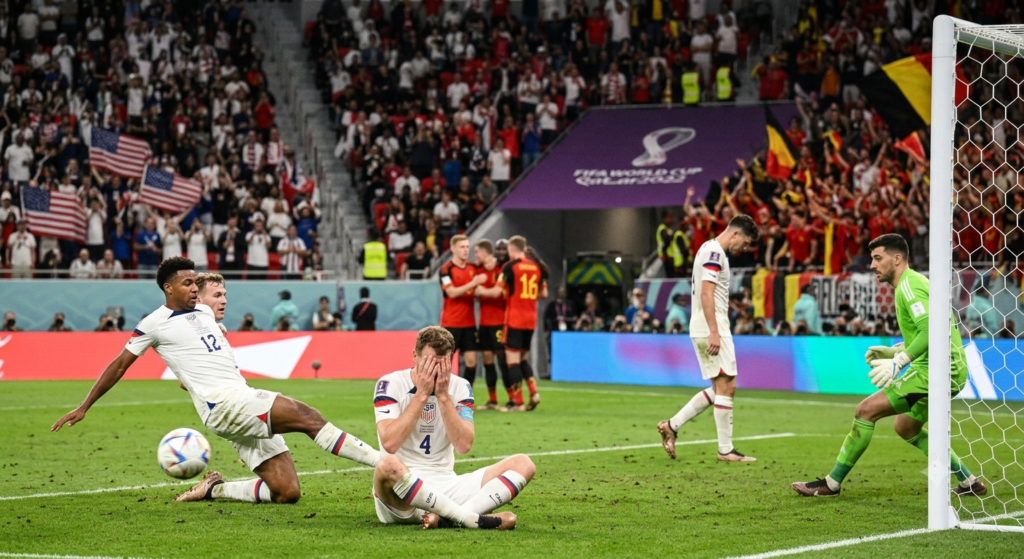
- 38th Minute: He committed a comedy of errors, completely miskicking a routine clearance inside his own box after hesitating under minimal physical pressure.
He finished the match having won a dismal 33% of his ground duels and was directly at fault for two of Belgium’s four goals. This was a career-defining bad night on the biggest stage imaginable.
CB: Left Center-Back – Rating: 3/10
While not as overtly calamitous as his central partner, he offered zero stability or leadership as the defensive structure collapsed around him. He struggled significantly in the air, losing key physical battles against Belgium’s primary aerial targets. His passing out of the back was passive and risk-averse, routinely cycling the ball horizontally to his left-back rather than attempting to break lines or feed the midfield transitions. In the second half, as the U.S. threw bodies forward in a desperate search for an equalizer, his lack of lateral recovery speed was utterly exposed on the counter-attack, leaving him chasing shadows during Belgium’s third and fourth goals.
The Fullbacks: Overcommitted and Exposed
[U.S. Fullbacks Over-index Upfield] ──> [Massive Spaces Left Flank & Right Flank]
                                                 │
                                                 └──> [Belgian Wingers Exploit on Counter]
RB: Right-Back – Rating: 4/10
The tactical game plan demanded that he push high up the pitch to pin back the Belgian wingers, but his execution lacked any semblance of defensive balance. He consistently overcommitted to the attacking phase, leaving a massive vacuum behind him that Belgium systematically targeted all evening. His recovery runs were slow and visibly sluggish, frequently leaving his right center-back isolated in high-risk, one-on-one situations. Offensively, despite getting into excellent crossing positions in the final third, his final delivery was highly inefficient, with only 1 out of his 6 cross attempts successfully finding an American jersey in the box.
LB: Left-Back – Rating: 4.5/10
Marginally the best performer across a thoroughly broken back four, though that is incredibly faint praise. He showed tremendous work rate, tirelessly sprinting up and down the left flank to provide an overlapping outlet for Christian Pulisic. However, his attacking intent was severely hampered by a complete lack of technical precision. Defensively, he was caught in possession deep inside his own half early in the second half, a turnover that nearly resulted in another Belgian goal. He fought hard until the final whistle, but his structural positioning left a great deal to be desired.
Midfield Engine Room: High Work Rate, Zero Control
A football match is fundamentally won and lost in the middle third of the pitch. While the American midfield trio entered the match with a reputation for intense pressing and relentless energy, they were completely outclassed technically by a disciplined, calculating Belgian mid-block.
DM: Defensive Midfielder – Rating: 4/10
Tasked with protecting the back four and shielding the spaces between the lines, he found himself utterly overwhelmed by the fluid movement of Belgium’s creative playmakers. He spent the majority of the first half chasing shadows, unable to get close enough to disrupt the opposition’s passing rhythm.
His tracking back during transition phases was highly problematic; during Belgium’s third goal in the 74th minute, he failed to step up and pressure the ball carrier at the edge of the box, allowing a curling effort to sail comfortably into the side netting. His lack of positional discipline left the central defenders completely unprotected against a barrage of vertical counter-attacks.
CM: Central Midfielder (Box-to-Box) – Rating: 5.5/10
The only member of the starting midfield who can hold his head high regarding individual effort. He covered an immense amount of grass, attempting to bridge the gap between a retreating defense and an isolated attack.
His statistical metrics reflected his sheer grit:
- 7 Tackles attempted (4 won)
- 12 Ground duels contested
- 88% Passing accuracy in the middle third
Despite his commendable work rate, he lacked the creative vision to unlock a compact Belgian defense. His passes were safe and predictable, doing little to shift the Belgian defensive block out of its rigid shape.
CM: Attacking Midfielder – Rating: 4/10
A highly disappointing outing for a player expected to be the creative spark plug of the team. He was entirely suffocated by Belgium’s tight, aggressive defensive setup. Every time he dropped deep to pick up the ball, he was instantly closed down by two opposing players, turning the ball over in dangerous areas or forcing play backward. He failed to register a single key pass or successful dribble during his 65 minutes on the pitch before being mercifully substituted. His inability to find space in the half-spaces completely paralyzed the USMNT’s central progression.
The Attacking Line: Pulisic Isolated, Attack Starved
RW: Right Winger – Rating: 4.5/10
A quiet, largely anonymous performance on the right flank. He struggled immensely to impact the game, finding himself completely isolated due to the lack of overlapping support and structural cohesion. When he did manage to receive the ball on the wing, his decision-making was hesitant, frequently taking too many touches and allowing the Belgian defense to reset. He drifted inside in the second half to try and influence the game centrally, but he merely crowded the space, making it even easier for Belgium to defend their lead.
[Belgian Defensive Line] ──> Compact Space ──> [Pulisic & Attackers Suffocated]
ST: Center Forward – Rating: 3.5/10
A truly frustrating night for the leading man up front. While it is true that he suffered from an absolute lack of service from his midfielders, his structural movement was incredibly poor. He consistently made the same runs into the teeth of the Belgian center-backs, making himself incredibly easy to mark out of the game.
He managed only 14 touches of the ball throughout his entire time on the pitch—the lowest of any starting player on either team. When a half-chance finally fell to him early in the second half via a loose clearance, he rushed his shot completely, scuffing it wide of the near post. A performance to forget.
LW: Christian Pulisic – Rating: 5/10
As the undisputed superstar and captain of this team, the weight of a nation’s expectations rested heavily on Pulisic’s shoulders. He started the match with immense intent, embarking on a dazzling solo run in the 8th minute that forced an early corner. However, as the structural integrity of the team fell apart around him, his performance visibly deteriorated into frustration.
He became incredibly isolated on the left wing, forced to drop deeper and deeper into his own half just to get a touch of the ball. Surrounded by multiple defenders every time he pushed forward, he frequently tried to do too much on his own, turning the ball over 18 times over the course of the match. While his work rate cannot be faulted, his inability to elevate the players around him or find a creative breakthrough when the team needed it most caps his rating at a mediocre 5.
Substitutes & Managerial Tactical Review
The Impact From the Bench
Sub 1: Midfielder (61st Minute) – Rating: 7/10 (Man of the Match for USA)
The lone bright spot on a historically dark night. Coming on in the 61st minute, he injected an immediate burst of intensity, aggression, and directness into a stale American side. Within minutes of his introduction, he rose highest inside a crowded penalty box to power home a beautifully delivered corner kick, briefly pulling the score back to 2-1 and breathing life back into the American dream. He looked dangerous every time he touched the ball, driving forward with intent and asking genuine questions of the Belgian backline. His performance raises massive questions about why he did not start the match.
Sub 2: Forward (65th Minute) – Rating: 5/10
Brought on to provide a physical presence up front and give the team a dual-striker look as they chased an equalizer. He worked hard to press the Belgian center-backs and managed to win two aerial duels, but he never received the quality of service required to test the opposing goalkeeper.
Sub 3: Winger (80th Minute) – Rating: N/A
Came on late in the match when the contest was already completely dead and buried at 4-1. Had too few touches to warrant a fair statistical rating.
Tactical Breakdown: The Managerial Failure
Manager – Rating: 2/10
This defeat must ultimately be laid squarely at the feet of the coaching staff. The tactical setup heading into a knockout match of this magnitude was naive in the extreme. Knowing full well that Belgium possessed some of the most lethal counter-attacking weapons in world football, the decision to deploy an aggressive, high-pressing line with overlapping fullbacks was tantamount to tactical suicide.
Tactical Choice: Rigid 4-3-3 High Press
   ├── Failure to adjust after 14' turnover goal
   ├── Complete lack of structural cover in half-spaces
   └── Failure to deploy a functional "Plan B"
More damning than the initial game plan was the absolute failure to make real-time tactical adjustments. After the first goal exposed the massive gaps behind the fullbacks, there was no attempt to alter the defensive line or drop the midfielders deeper to provide structural cover. The team continued to push forward blindly, walking directly into the exact counter-attacking traps that Belgium had set. The substitutions, while impactful in the case of the goalscorer, were made far too late to salvage a match that had already slipped completely out of control. This was a tactical masterclass by Belgium and a complete managerial failure for the United States.
Comprehensive Post-Match Statistical Overview
To truly comprehend the structural gulf between the two teams on this night, one must analyze the underlying technical data. The statistics reveal a match where the U.S. controlled large portions of meaningless possession while being utterly dominated in every single high-value metric.
| Statistical Metric | USMNT | Belgium |
| Total Shots (On Target) | 9 (3) | 18 (9) |
| Expected Goals (xG) | 0.84 | 2.87 |
| Big Chances Created | 1 | 5 |
| Possession % | 54% | 46% |
| Defensive Errors Leading to Goals | 3 | 0 |
| PPDA (Passes Per Defensive Action) | 14.2 | 8.5 |
The data paints a damning picture. While the U.S. held 54% of the ball, their low Expected Goals (xG) of 0.84 proves that their possession was completely sterile, failing to translate into dangerous scoring opportunities. Meanwhile, Belgium’s staggering 5 big chances created and an xG of 2.87 demonstrates how effortlessly they carved open the American defense every single time they transitioned forward.
Conclusion: A Long Road of Introspection Awaits
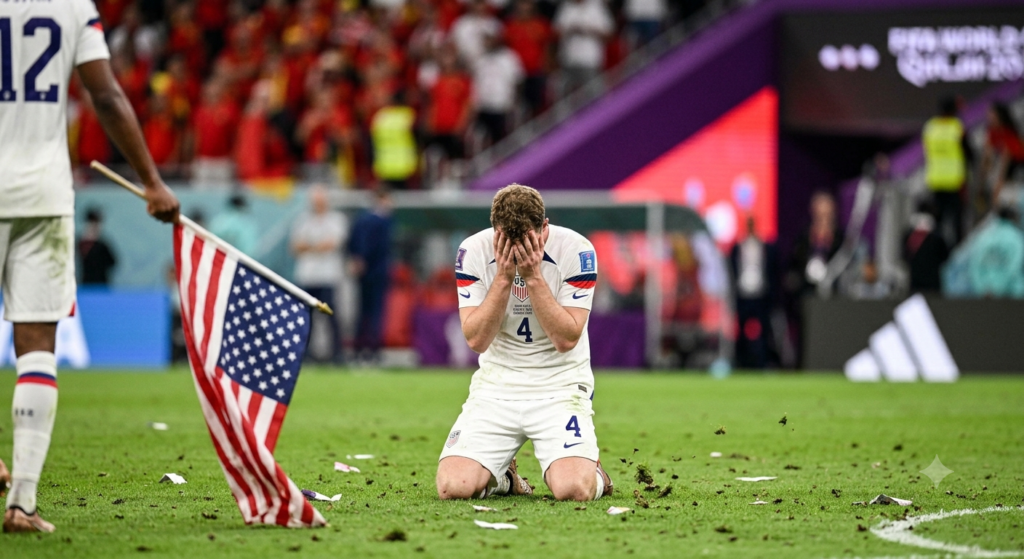
This 4-1 capitulation against Belgium will not be easily forgotten. It stands as a painful, sobering monument to a missed opportunity—a night where an entire generation of American talent failed to step up when the stakes were at their absolute highest. The individual defensive mistakes were embarrassing, but the systemic tactical naivety that allowed those mistakes to occur is what should truly alarm the hierarchy of U.S. Soccer.
As the team flies home to process the immense disappointment of this World Cup exit, a long and arduous road of introspection lies ahead. Hype, potential, and lucrative club contracts mean absolutely nothing when the whistle blows in a knockout match. If this young core of players, including Christian Pulisic, ever hopes to truly compete for global honors, they must develop the grit, tactical awareness, and defensive discipline that tournament soccer rigidly demands. Until then, nights like this will continue to serve as a harsh reminder of how far the USMNT still has to go.

Leave a Reply